Apartment Access Control: Stop Buzzing In Strangers
Your buzzer isn't access control. It's guesswork. Learn why 71% of renters want more building security, what modern apartment access control looks like, and how to stop buzzing in strangers without hardware, landlord approval, or giving up convenience.
Knockli Team
Smart Building Access
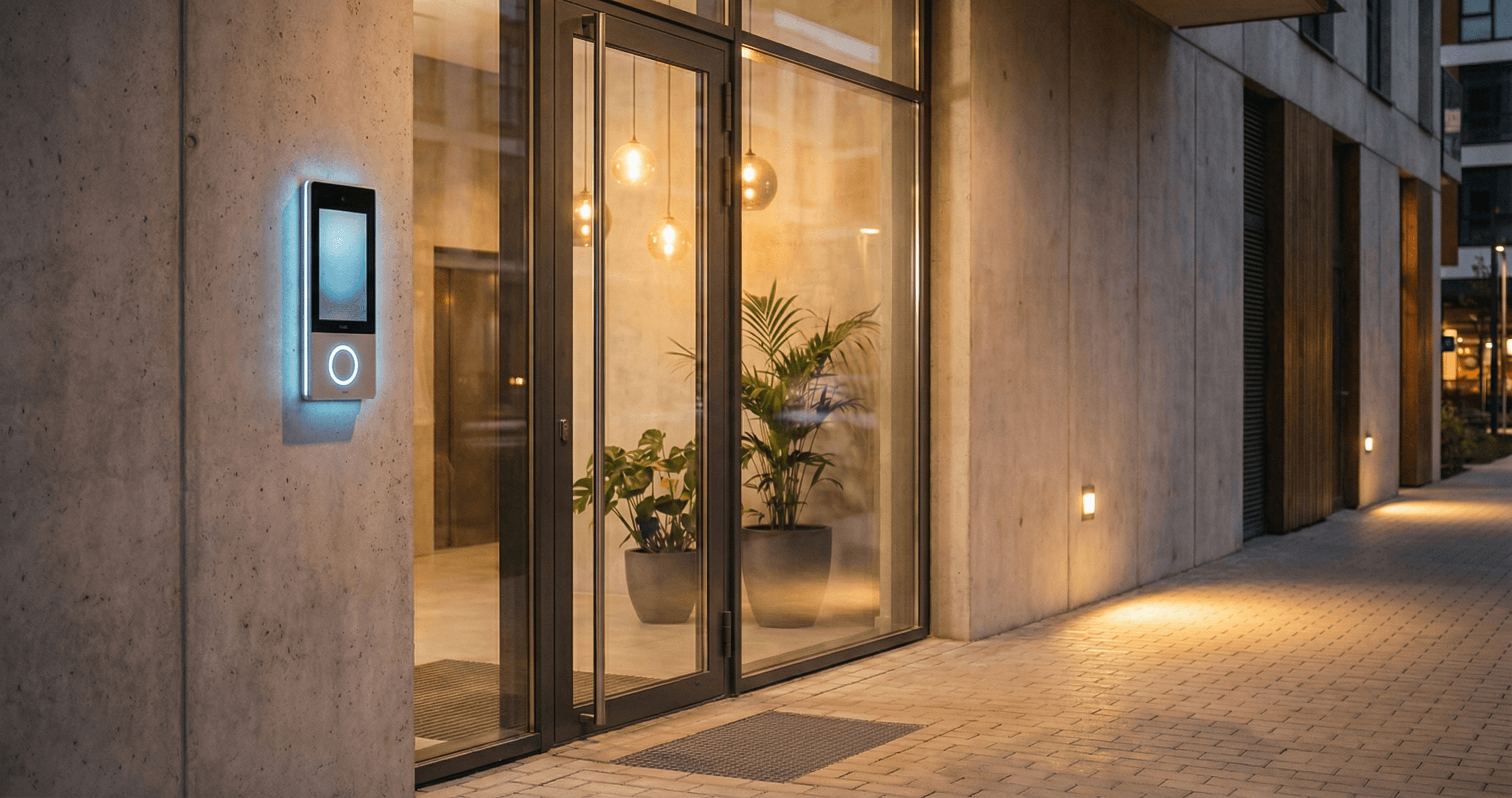
For most renters, apartment access control starts and ends with a buzzer. Someone presses a button, your phone rings, and you make a split-second decision about whether to let them in. No context. No verification. No record of what happened next.
That's not security. It's guesswork.
What is apartment access control? Access control is the practice of selectively restricting and monitoring who can enter a space. For apartment residents, it means having the ability to verify, approve, or deny visitors at your building's front door, whether you're home or not.
Most buildings still rely on a system designed decades ago: a buzzer, a phone call, and a single button to unlock the lobby. According to the NAA's 2024 State of Tenant Safety report, 71% of apartment renters want their building management to do more about security. That same report found that 60% of renters do not feel very safe in their complex.
The buzzer system is a big part of why.
This guide breaks down what apartment access control actually means for renters, why the standard buzzer puts your building at risk, and what you can do about it today.
Why Your Apartment Buzzer Is a Safety Risk
The buzzer on your building was designed for one purpose: letting a visitor signal they're at the door. It was never built to screen anyone.
Here's what happens in practice. Someone buzzes your unit. If you're home, you pick up the phone and hear a voice. They say "delivery" or "I'm here for 3B." You press 9 (or whatever your building's unlock code is) and the lobby door opens. If you're not home, the call goes unanswered and the visitor is stuck outside.
This system has a few serious problems.
Blind buzzing. When someone buzzes, all you get is audio. No camera, no name, no way to confirm their identity. You're making a security decision based on a voice and a claim. Anyone can say "delivery." Anyone can say "I'm here for your neighbor."
No audit trail. Once someone is inside, there's no record of who entered or when. If something goes missing or an incident occurs in the building, you have no information to work with.
Zero remote capability. If you're at work, at the gym, or traveling, your buzzer is useless. Calls go unanswered, deliveries get missed, and expected guests stand outside with no way in.
Social engineering is easy. A Deep Sentinel survey of apartment renters found that package theft is the #1 reported crime in apartment buildings, affecting 39% of residents. Unwanted visitors are a concern for another 26%. Getting past a buzzer system usually requires nothing more than pressing a few buttons and saying "delivery" until someone buzzes you in.
The reality is that apartment buzzer safety depends almost entirely on the judgment of whoever picks up the phone. And that's assuming someone picks up at all. If you want to understand the full mechanics of these systems and where they fall short, see our guide on how apartment buzzers actually work.
What Does Apartment Access Control Actually Look Like?
Real apartment access control goes well beyond a buzzer and a button. It has three components that traditional intercoms lack entirely.
Verification before access. Instead of hearing a voice and guessing, proper access control confirms who a visitor is before the door opens. That could mean asking follow-up questions, matching a passphrase, or checking against a list of expected visitors.
Rules you define. You decide who gets in and under what conditions. Delivery drivers during business hours? Your mom anytime? No one after 10 PM? Access control means these decisions are made in advance and applied consistently, not improvised every time the buzzer rings.
Visibility and records. Every interaction at your building's front door is logged. You know who buzzed, what they said, whether they were let in, and when it happened. If something goes wrong, you have actual information instead of a blank.
This is where services like Knockli come in. Knockli is an AI-powered doorman that connects to your existing buzzer system. When someone buzzes your unit, Knockli answers the call, screens the visitor, applies your rules, and either grants access, declines, or forwards the call to you. Everything is logged so you can review it later.
There's no hardware to install. Most buildings don't require landlord approval because you're simply updating which phone number your unit's buzzer calls. You're not replacing your intercom. You're upgrading what happens when someone uses it.
How Do You Control Building Entry Without Being Home?
One of the biggest frustrations with apartment living is what happens when your buzzer rings and you're not there to answer. A package gets returned. A friend stands outside for 20 minutes. Your dog walker can't get in.
With AI-powered apartment access control, building entry without being home becomes straightforward. You can answer your apartment intercom from your phone, anywhere in the world, or let the AI handle it entirely.
Here's how it works with Knockli. A visitor buzzes your unit. Instead of your phone ringing, Knockli's AI doorman picks up the call. It greets the visitor, asks who they are and why they're there, and evaluates their response against the rules you've set. If the visitor matches a rule (for example, a delivery driver during your allowed time window), Knockli unlocks the door and gives spoken instructions about where to leave the package. If the visitor doesn't match any rule, Knockli either declines politely or forwards the call to your phone so you can decide.
You set your rules in plain language. "Let delivery drivers in on weekdays before 8 PM." "Always let my partner in." "Ask me first for anyone I don't know." Knockli interprets these rules and applies them in real time.
The key difference from a traditional buzzer is that the system works whether you're home, at work, asleep, or on a plane. Your building's front door is always managed according to your preferences.
For anyone interested in the full strategy behind remote visitor verification, our guide on screening visitors when you're not home covers both manual techniques and automated approaches.
Five Scenarios Where This Changes Daily Life
The gap between "buzzer" and "access control" becomes obvious when you look at specific situations renters deal with every week.
Deliveries. Apartment residents are 3 to 3.5 times more likely to have packages stolen than single-family homeowners, according to Security.org. The USPS Office of Inspector General has flagged package theft as a growing national concern, with SafeWise estimating over $15 billion in annual consumer losses. With Knockli, verified delivery drivers are granted access during your set hours, and they receive spoken instructions on where to leave packages. No more "sorry we missed you" slips.
Working from home. Your buzzer doesn't care that you're on a call with your boss. It rings and expects you to drop everything. With access control rules in place, expected visitors are handled without interrupting you. Knockli screens the call, grants or denies access, and sends you a notification afterward. You review it when you're ready, not when the buzzer demands it.
Service providers. Dog walkers, cleaners, and maintenance workers all need periodic access to your building. Setting up rules for recurring visitors means they get in when they're supposed to, without you coordinating by text every time. For more on this specific scenario, check out our guide on letting service providers into your building safely.
Traveling or away. Whether you're gone for the weekend or two weeks, your building's front door keeps working. Knockli handles visitors according to your rules, logs every interaction, and sends you a summary. You can tighten the rules while you're away (decline all unknown visitors, for example) and loosen them when you get back. Your building stays managed while you're thousands of miles away.
Late-night quiet. Random buzzes at midnight are a real problem in apartment buildings. Quiet hours automatically decline unknown visitors during times you specify. If someone claims it's an emergency, Knockli can forward the call to you. Otherwise, your sleep stays uninterrupted.
What Should Renters Look for in Apartment Access Control?
If you're evaluating your options for taking control of your building's entry, here are the criteria that matter most.
No hardware or landlord approval. Any solution that requires you to install equipment or get your building's permission is going to create friction. Look for software-only options that work with the intercom system your building already has.
Works with phone-based buzzers. Most apartment buzzers work by calling a phone number when someone buzzes your unit. Your access control solution should plug into this existing workflow. Knockli does exactly this: your building's buzzer calls your Knockli number instead of your personal phone, and the AI handles the rest.
Policy-driven rules, not just on/off. A simple "forward calls" or "block all calls" toggle is not access control. You need the ability to set specific conditions: who gets in, when, and under what circumstances. Good access control handles the complexity of real life.
Activity logging. You should be able to see every interaction at your door. Who buzzed, what they said, how the system responded, and whether access was granted. This transparency is essential for both security and peace of mind.
Household support. If you live with a partner, roommates, or family members, everyone needs to be able to set rules and see what's happening. Access control that only works for one person in a shared apartment is incomplete.
Reliability and fallback. What happens if the system encounters something unexpected? Look for solutions with a clear fallback path. With Knockli, if the AI can't determine what to do, it forwards the call to your phone so you can take over manually. You're never locked out of the decision.
Privacy and data control. Your access control system handles sensitive data: who visits your building, when, and what they say. Make sure you understand what data is collected, how it's stored, and what controls you have over it. You should be able to review and delete your own records, and the system should be transparent about how long recordings and logs are retained.
Take Control of Your Building's Front Door
The Apartments.com Q3 2024 renter survey found that half of renters cite safety as a top factor when choosing where to live, second only to price. But most buildings still rely on a buzzer system that provides zero screening, zero logging, and zero flexibility.
You don't have to wait for your landlord to upgrade the building's intercom. Apartment access control is something you can set up yourself, in about 10 minutes, for $19/month.
Knockli gives you the ability to screen apartment visitors, set rules for who gets in and when, log every interaction at your building's door, and handle building entry whether you're home or not. It works with your existing buzzer, includes your whole household, and puts you in control of something that should have been in your control all along.
You shouldn't have to choose between security and convenience every time your buzzer rings. With the right access control in place, you don't have to.
Your building's front door doesn't have to be a security gap. With apartment access control that actually works for you, it becomes the most reliable part of your day.
Related Articles
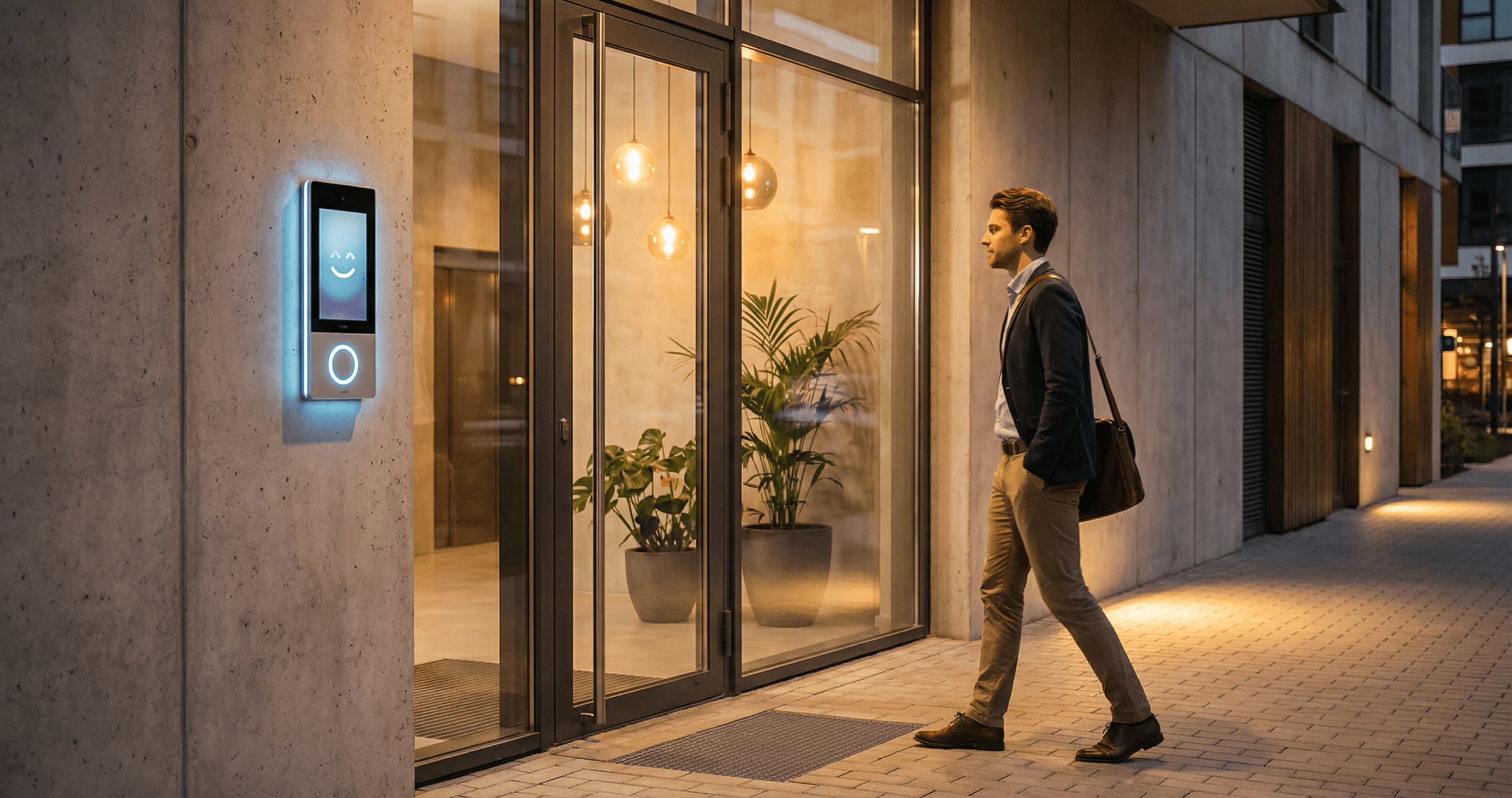
Smart Apartment Security Without Landlord Approval
Smart security options for apartment renters. AI-powered access control, video doorbells, and virtual doorman solutions - no permanent installation.
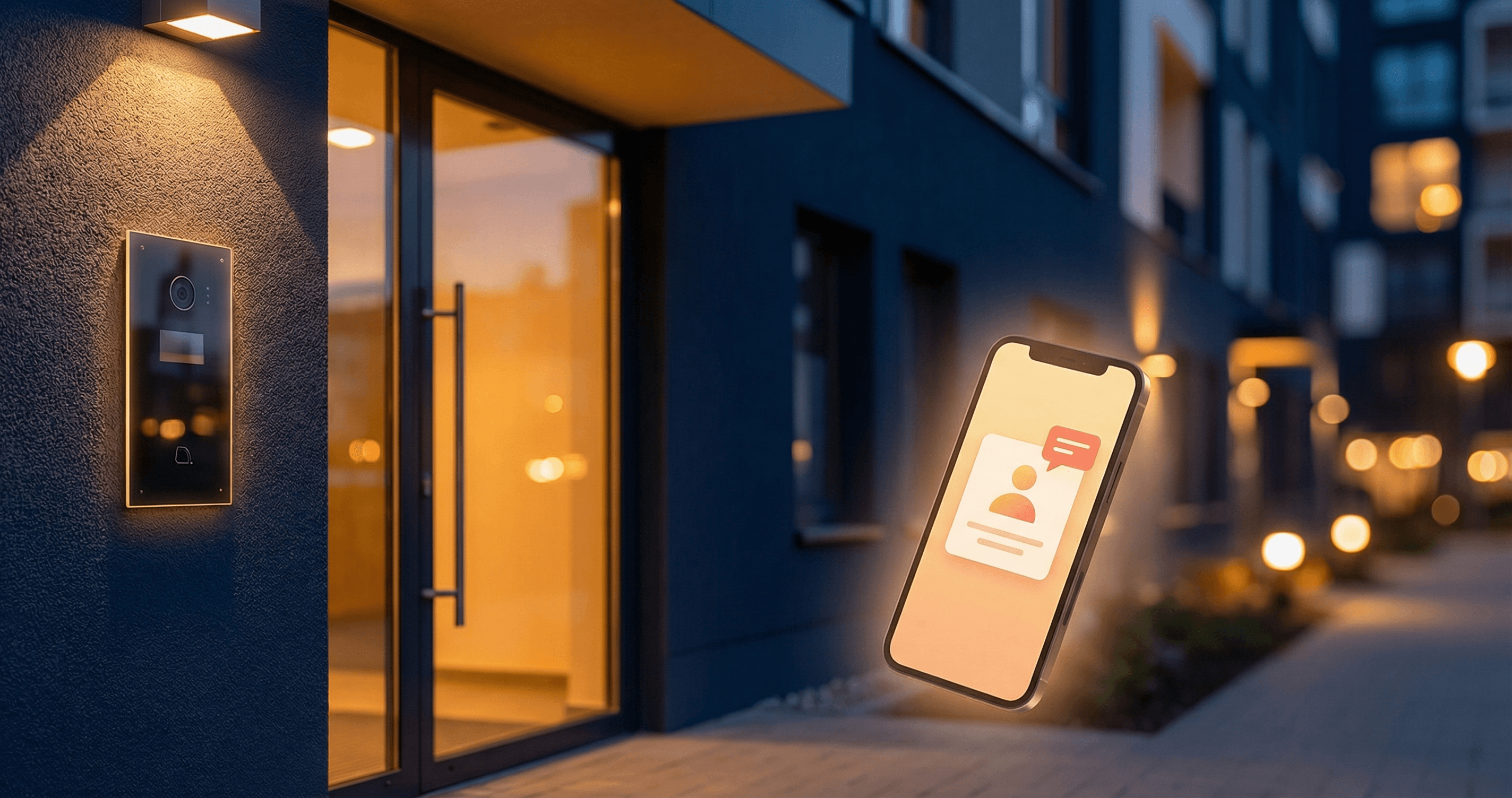
Introducing Knockli: Your AI Doorman Is Here
Knockli is your AI doorman. It answers your apartment buzzer, screens visitors, and handles deliveries automatically. No hardware needed, no landlord approval.
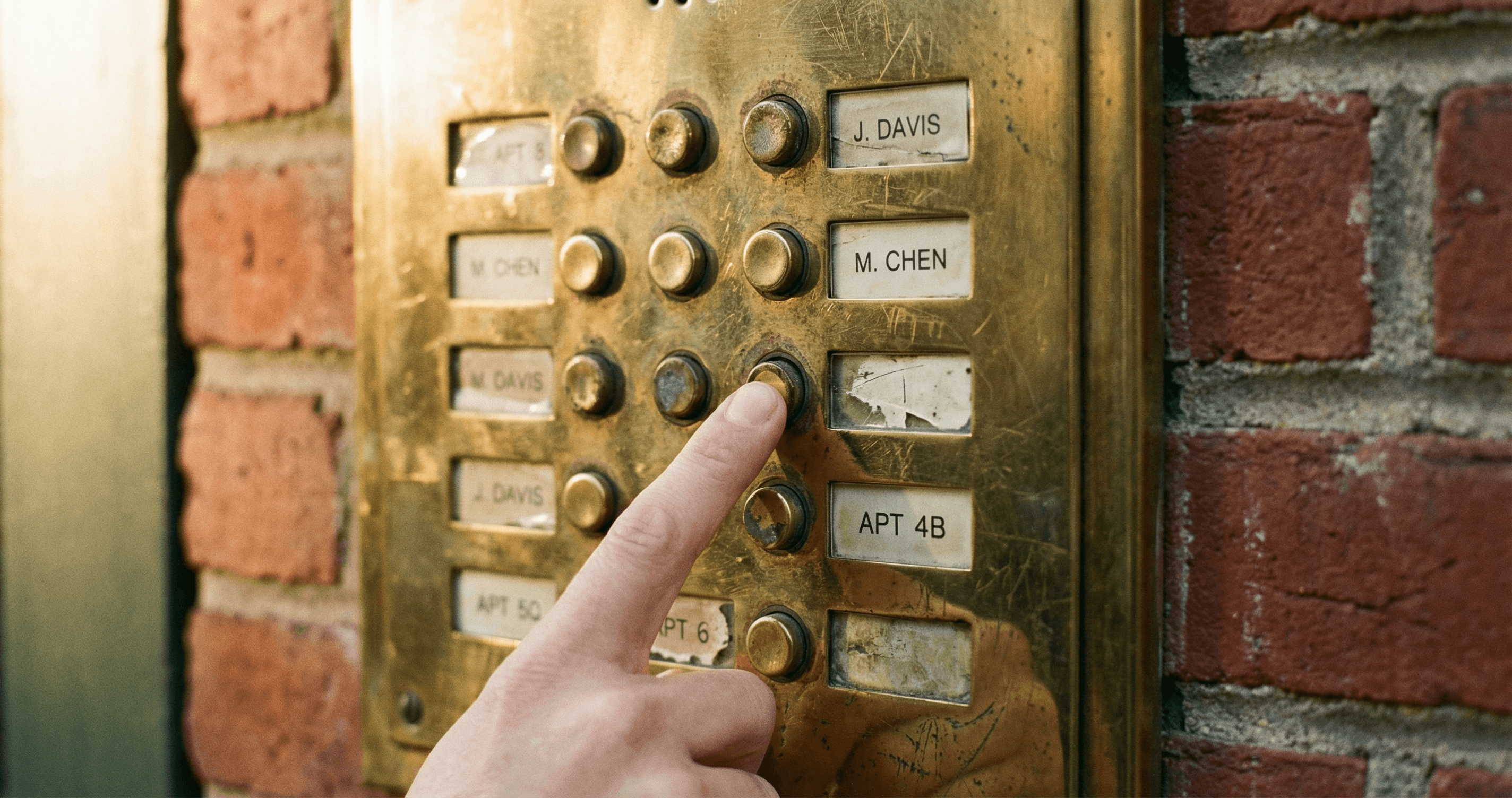
Apartment Intercom Not Working? Fixes That Actually Help
Apartment intercom not working? Diagnose common buzzer problems by symptom: static, no audio, door won't unlock, and more. Practical fixes you can try today.