Apartment Delivery Problems Aren't the Driver's Fault
Delivery times halved since 2020, but 8-20% of packages still fail on the first attempt. The logistics industry perfected routing while the actual problem - your building's locked vestibule - costs $17.78 per failure. Data from McKinsey, USPS, and SafeWise reveals why.
Knockli Team
Building Access Intelligence
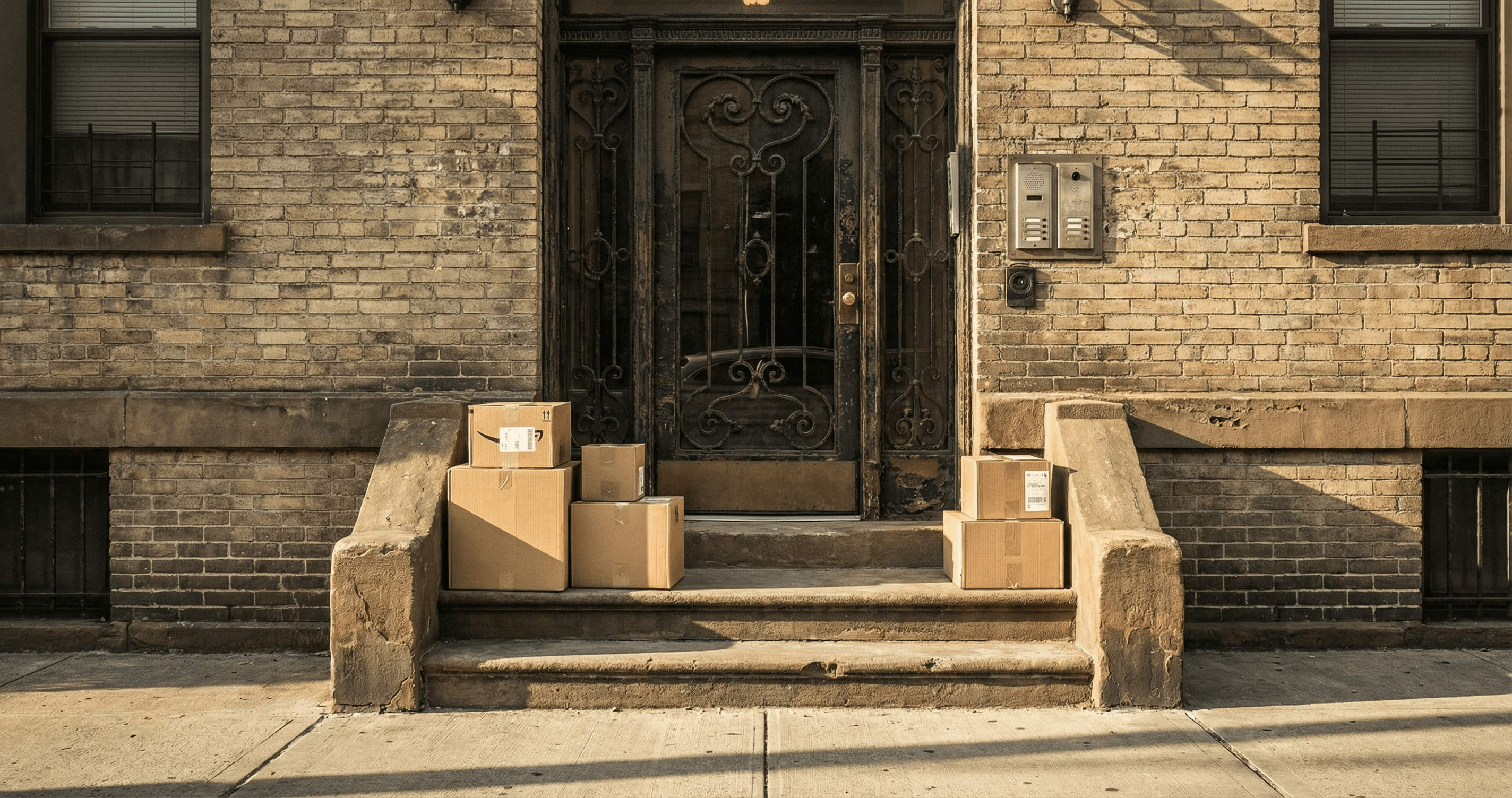
U.S. e-commerce delivery times dropped 43% between 2020 and 2025, falling from 6.5 days to just 2.47 days on average. Carriers invested billions in algorithmic routing, regional fulfillment centers, and fleet optimization. By every macro metric, the supply chain has never been faster.
And yet, between 8% and 20% of your deliveries still fail on the first attempt. If you live in a dense urban area, that number climbs to 25%.
You probably blame Amazon, FedEx, or that one USPS driver who never seems to ring the buzzer. But the data points somewhere else entirely. The real reason your apartment delivery problems persist has almost nothing to do with your driver. It has everything to do with the building you live in.
What a Failed Delivery Actually Costs You
Every "Sorry We Missed You" slip represents more than a minor inconvenience. The direct cost of a single failed delivery averages $17.78 across the U.S. logistics industry. That figure compounds through re-delivery labor, driver idle time, customer support triage, and the replacement shipments that follow.
You don't see an itemized bill for $17.78 when your package fails. But you absorb it anyway. Retailers bake failed-delivery costs into product pricing, shipping surcharges, and subscription fees. Aggregated nationally, delivery failures, replacements, and customer churn contribute to an estimated $216 billion in lost retail revenue each year.
The behavioral consequences are just as real. According to SmartRoutes industry data, 23% of consumers refuse to reorder from a retailer after a single failed delivery. 84% will abandon a brand entirely after a severely negative delivery experience. And 41% blame the retailer, not the carrier, for the failure.
Here is the critical detail most residents miss: 45% of all delivery failures are attributed to address ambiguity. That rarely means the driver had the wrong street number. It means a missing apartment identifier, an outdated access code, a poorly marked entrance, or a building the driver simply could not enter because nobody answered the buzzer.
The problem isn't that the driver couldn't find your street. It's that the driver couldn't get through your front door.
Your Building Was Designed Before Package Delivery Existed
The U.S. delivered 3.1 billion packages in 2010. By 2024, that number surged past 22 billion annually. Cities whose streets were designed for pedestrians and streetcars now absorb a relentless daily wave of delivery vans trying to reach individual apartment doors.
The collision between modern e-commerce volume and historical residential architecture is where apartment delivery problems originate. Buildings constructed before 1940, walk-up apartments, brownstones, rowhouses, early 20th-century multi-tenant blocks, fundamentally lack the infrastructure to absorb today's delivery volume. No elevators. No staffed lobbies. No secure mailrooms. No parcel lockers. No digital intercoms.
The National Apartment Association reports that 53% of property management professionals still rely exclusively on mechanical keys for their properties. First-generation analog buzzers remain the primary access technology in millions of apartment buildings.
A USPS Office of Inspector General audit documented what this means for your delivery driver through ride-along observations in cities like New York. A carrier can easily spend up to 10 minutes completing a single delivery inside one dense apartment building. The driver must find curb parking on streets that were never designed for commercial trucks (up to 80% of urban deliveries involve some form of illegal parking), gain entry through a buzzer that may or may not work, and then carry your package up multiple flights of stairs.
If you've ever wondered why a driver left your package in the vestibule instead of bringing it to your door, or marked it as "delivered" when it was left on the stoop, this is the physical reality they navigate hundreds of times per day.
For a deeper look at how building-level vulnerabilities enable theft, see our guide to apartment package theft prevention for renters.
Apartment Delivery Problems by City: Where It Hits Hardest
The severity of apartment delivery failures maps directly onto cities with the oldest, densest housing stock. Four U.S. metros illustrate the pattern.
| Metro | Daily Parcels | Pre-1940 Housing | Annual Package Theft (2024) | Defining Challenge |
|---|---|---|---|---|
| New York City | 2.5 million | ~30%+ | $945 million | Extreme volume, minimal loading zones |
| Chicago | High | 40.4% | $262 million | 728 thefts per 1,000 homes |
| Philadelphia | High | 41.2% | $450 million | Zero-setback rowhouses, single-lane streets |
| San Francisco | High | High | #1 per-capita theft rate | Extreme topography, near-zero new construction |
New York City now processes 2.5 million package deliveries every single day, up from 1.1 million in 2017. Drivers lose 117 hours annually to congestion, and injury rates at last-mile facilities run more than triple the national average. Meanwhile, 68% of new distribution warehouses are concentrated in environmental justice neighborhoods bearing the brunt of heavy truck traffic.
Chicago leads the nation in per-household package theft at 728 incidents per 1,000 homes. FOIA data obtained from USPS revealed that Chicago recorded 9,703 reports of lost or missing mail between 2022 and 2024, the highest absolute count in the country. When the city tried piloting delivery robots to bypass congestion, 84% of residents in the Lakeview East neighborhood opposed expansion due to sidewalk clutter and ADA violations.
Philadelphia's tightly packed rowhouses front directly onto narrow one-way streets with virtually zero buffer between the sidewalk and the front door. Packages left at these doors are visible and accessible to anyone walking by, contributing to Philadelphia ranking as the second-worst metro for package theft in the nation with $450 million in stolen goods in 2024.
San Francisco layers extreme topography onto the access problem. Despite not appearing in the top five metros by total dollar losses, the SF-Oakland-San Jose metro ranks #1 in the nation for per-capita package theft according to SafeWise. Decades of restrictive zoning have stifled new construction (the city permitted less than one new home per day in 2023), which means residents remain housed in older Victorian and Edwardian buildings or mid-century complexes that completely lack modern package infrastructure. California as a whole leads all states with 121,473 reports of lost or missing mail since 2022, 47% higher than the next state.
120 Million Stolen Packages: The Shadow Delivery Failure
There's a category of delivery failure that never shows up in carrier statistics.
When a driver leaves a package on your stoop or in an unsecured vestibule and scans it as "delivered," the logistics system considers that a successful handoff. But if someone steals it before you get home, the outcome for you is identical to a missed delivery: you don't have the thing you paid for.
According to SafeWise's annual metro analysis, 120.5 million packages were stolen in the United States in 2024. That represents $15.93 billion in lost merchandise. ValuePenguin's porch piracy survey found that 41% of Americans have been victimized at least once, up from 35% in 2022. More than a quarter of victims report having three or more packages stolen.
This shadow failure rate maps perfectly onto old-stock apartment buildings. The architectural vulnerability is simple and structural: in a pre-war walk-up or a Philadelphia rowhouse, the physical distance from the public sidewalk to your front door is measured in inches, not feet. Without secure access points, parcel lockers, or a way for drivers to place packages inside the building, every delivery becomes a theft opportunity. This is exactly the gap that AI-powered access tools like Knockli are designed to close: letting verified drivers deposit packages inside the building rather than leaving them exposed on the sidewalk.
The cost doesn't just hit you. Retailers absorb replacement margins, insurance claims, and support costs. Those costs flow back to you as higher prices, restocking fees, and shrinking return windows.
Why Better Routing Won't Fix Your Apartment Deliveries
This is the contrarian insight the logistics industry has been slow to confront: vehicle routing is a largely solved problem. The actual hemorrhage happens entirely within what researchers call the "Final 50 Feet".
Companies pour billions into AI-driven dynamic routing, predictive traffic modeling, and geospatial load optimization. Those algorithms can flawlessly navigate a van around a traffic jam and cluster drops by neighborhood. They are entirely useless when the driver arrives at a locked vestibule with a broken intercom and nobody home to buzz them in.
McKinsey analysts call this the "blind handoff." Supply chain visibility is near-perfect while a package crosses the country. You can literally watch the van approaching on a map. But that visibility drops to zero the moment the driver steps out of the vehicle and onto the sidewalk. McKinsey estimates these blind handoffs generate between $65 billion and $95 billion in pure economic waste annually within the U.S. logistics economy.
The math is stark. Shaving two minutes off a transit route through machine learning yields zero net benefit if the driver then spends ten minutes climbing stairs, searching for an apartment, or reloading an undeliverable package. The USPS confirmed this through direct observation: most of a driver's time in dense urban areas is spent navigating buildings, not streets.
This is where solutions like Knockli make the biggest difference. Instead of optimizing the route (already solved), they address the actual bottleneck: building access. When AI handles the intercom call, verifies the driver, and unlocks the door based on your delivery rules, the "blind handoff" becomes a managed, policy-driven access point.
What Actually Reduces Apartment Delivery Failures
The data points to three interventions that directly address building access, not routing.
Parcel lockers, where they exist, work. The Urban Freight Lab's landmark pilot at a 62-story Seattle building found that installing a common-carrier locker in the lobby reduced total delivery time by 78% (from 27 minutes to 5.6 minutes), with a failed delivery rate of zero. The economics are straightforward: smart lockers save $3 to $5 per parcel in re-delivery costs, effectively erasing the $17.78 failure penalty.
The catch is market fragmentation. Unlike Europe, where open-network lockers accept packages from any carrier, the U.S. market is dominated by proprietary systems. Your building's Amazon locker is useless for a USPS or FedEx delivery. True common-carrier lockers remain scarce in the cities that need them most.
Digital access control bridges the gap in old-stock buildings. Cloud-based smart intercom systems route buzzer calls to your phone regardless of where you are. You can verify the courier on video and remotely unlock the lobby door. More advanced systems generate single-use, time-restricted PINs that carriers input directly.
Knockli takes this a step further by removing the manual response entirely. AI answers the intercom call, has a natural conversation with the driver to verify who they are, and applies the delivery rules you've set. Verified carriers gain access during permitted hours. Unverified callers are screened. Everything is logged and available in your activity feed. Your building's existing buzzer becomes a managed access point without any hardware changes or landlord approval.
For residents juggling deliveries alongside other access needs, our guide to screening apartment visitors when you're not home covers the broader picture.
Micro-freight is emerging for the densest areas. Carriers in pedestrian-heavy and time-restricted zones are increasingly deploying electric cargo bikes and on-foot dispatch models. A cargo bike bypasses vehicular gridlock entirely, parks easily, and emits nothing. While it can't carry box-truck volume, its maneuverability in dense urban cores makes it viable for the final mile.
What You Can Do About It Today
Your building probably wasn't designed for 22 billion annual packages. But you're not stuck accepting a 20% failure rate.
Fix your delivery instructions. Be specific beyond just your apartment number. Include your building's buzzer code, which entrance to use, where to leave packages if you're not home, and any quirks (e.g., "Ring apartment 4B, not the front door buzzer"). Address ambiguity causes 45% of failures. Eliminating it is the single highest-leverage free action you can take.
Use smart access tools. If your building has a phone-based buzzer, Knockli turns it into an AI-managed access point in about 10 minutes. Verified delivery drivers get in. Strangers don't. You get a notification and a log of every interaction, all for less than the cost of one redelivered package per month.
Talk to your building. Request parcel locker installation. Ask about smart intercom upgrades. Property managers increasingly recognize that delivery infrastructure directly affects resident satisfaction and retention. For more practical strategies that actually reduce missed deliveries, we've compiled the approaches that work.
Know your recourse for stolen packages. File claims with the carrier (USPS, FedEx, and UPS all have claim processes). Check whether your credit card offers purchase protection. Document theft with photos and police reports, particularly if it's a pattern.
The Building Is the Bottleneck
The data is unambiguous. The logistics industry perfected how packages move across the country. The part they can't optimize is what happens when the driver steps out of the van and faces a locked door that was installed before package delivery existed.
Until the physical barrier between the delivery van and your apartment is bridged, faster routing, better algorithms, and more distribution centers will keep failing at the threshold. The $17.78 cost of every failed delivery, the $15.93 billion stolen from porches, and the $95 billion hemorrhaging from blind handoffs all trace back to the same place: the front door.
Your building is the problem. But you don't have to wait for your building to fix it.
Knockli turns your building's existing buzzer into an AI-managed access point. Delivery drivers get verified. Your rules get enforced. Every interaction gets logged. No hardware, no landlord approval, 10-minute setup. See how it works.
Related Articles
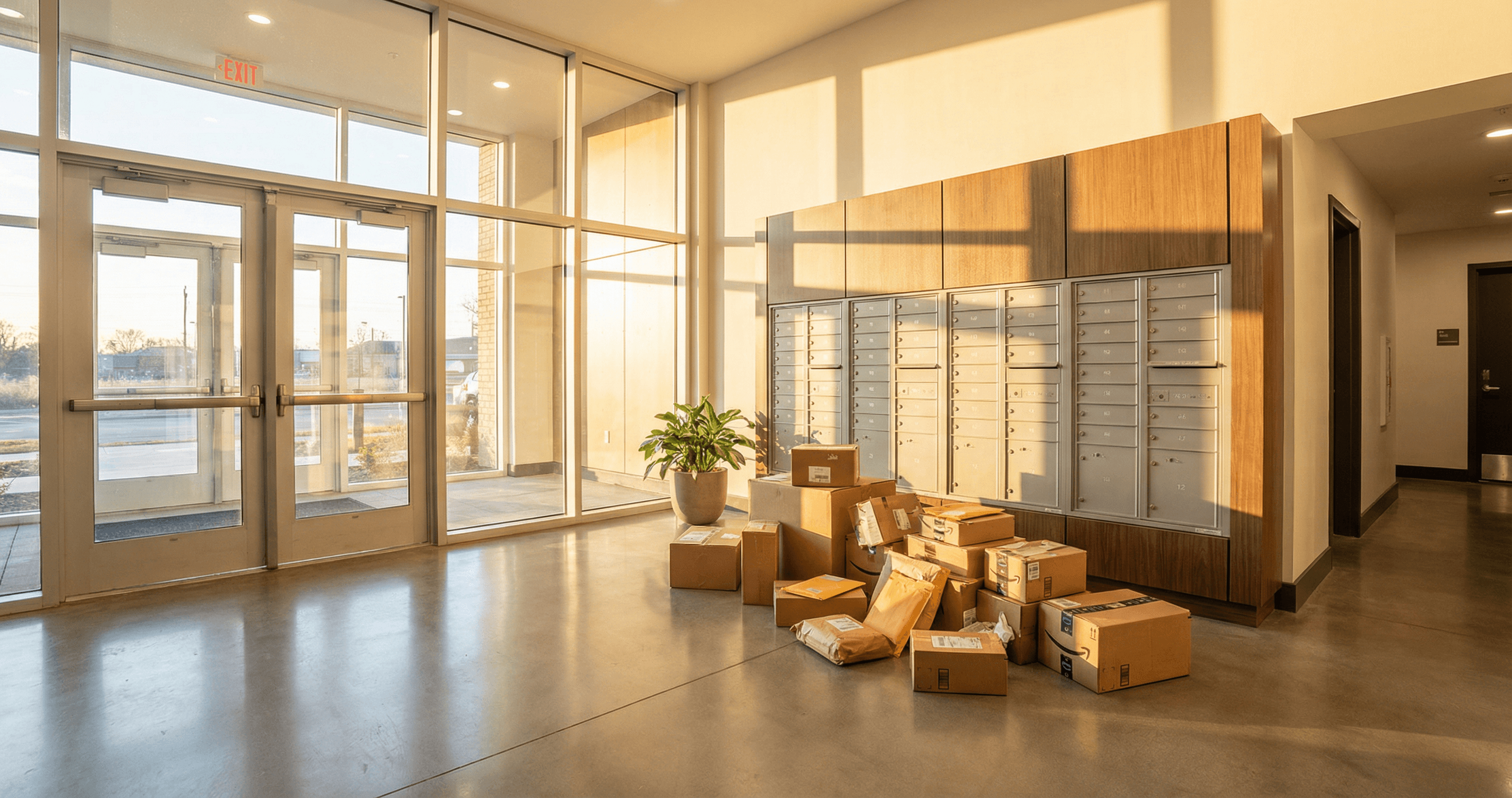
Apartment Package Theft: 3x Worse Than You Think
Apartment residents are 3x more likely to have packages stolen. Learn what to do when a package is stolen and how to prevent apartment package theft for good.
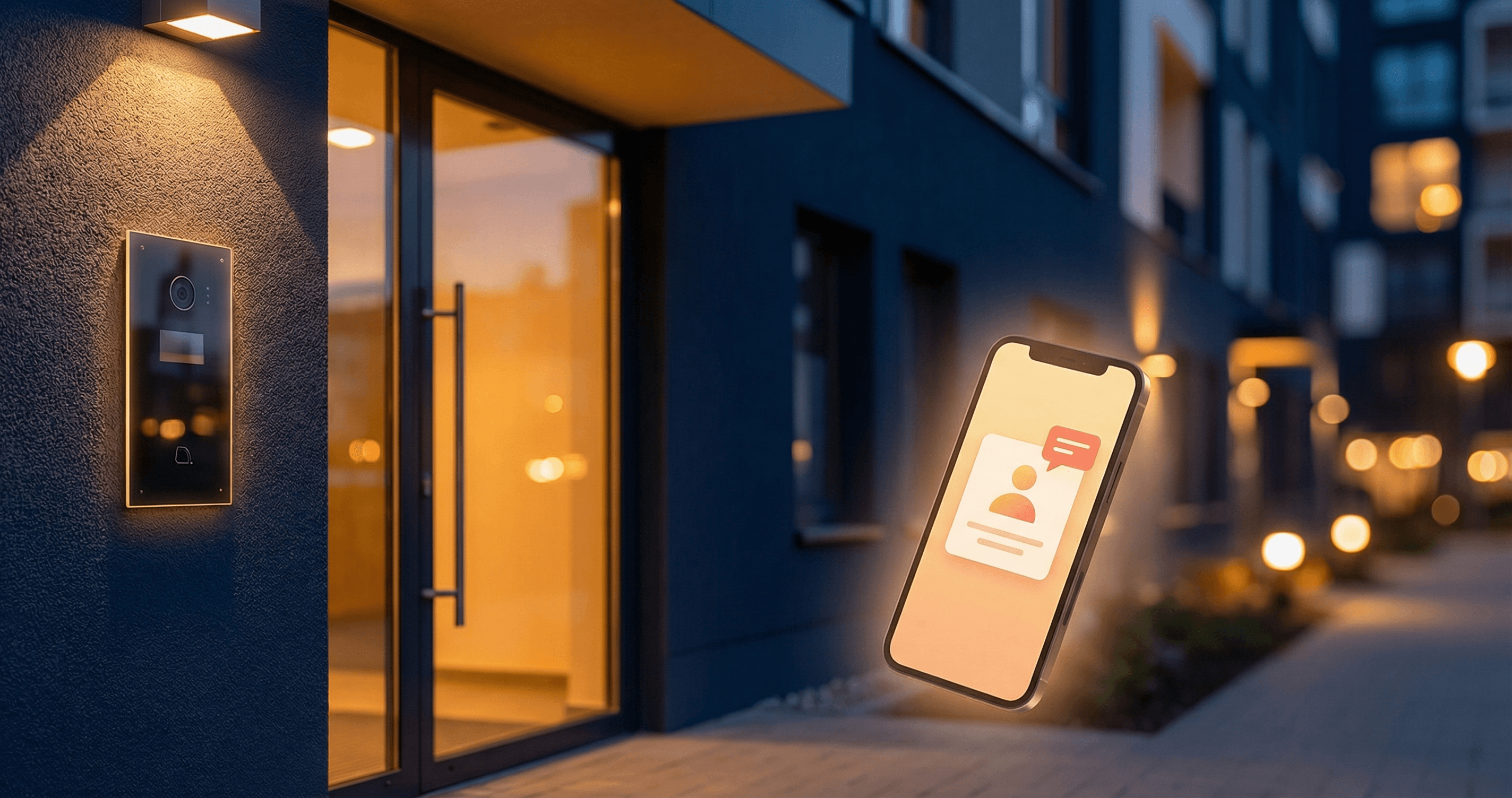
Introducing Knockli: Your AI Doorman Is Here
Knockli is your AI doorman. It answers your apartment buzzer, screens visitors, and handles deliveries automatically. No hardware needed, no landlord approval.
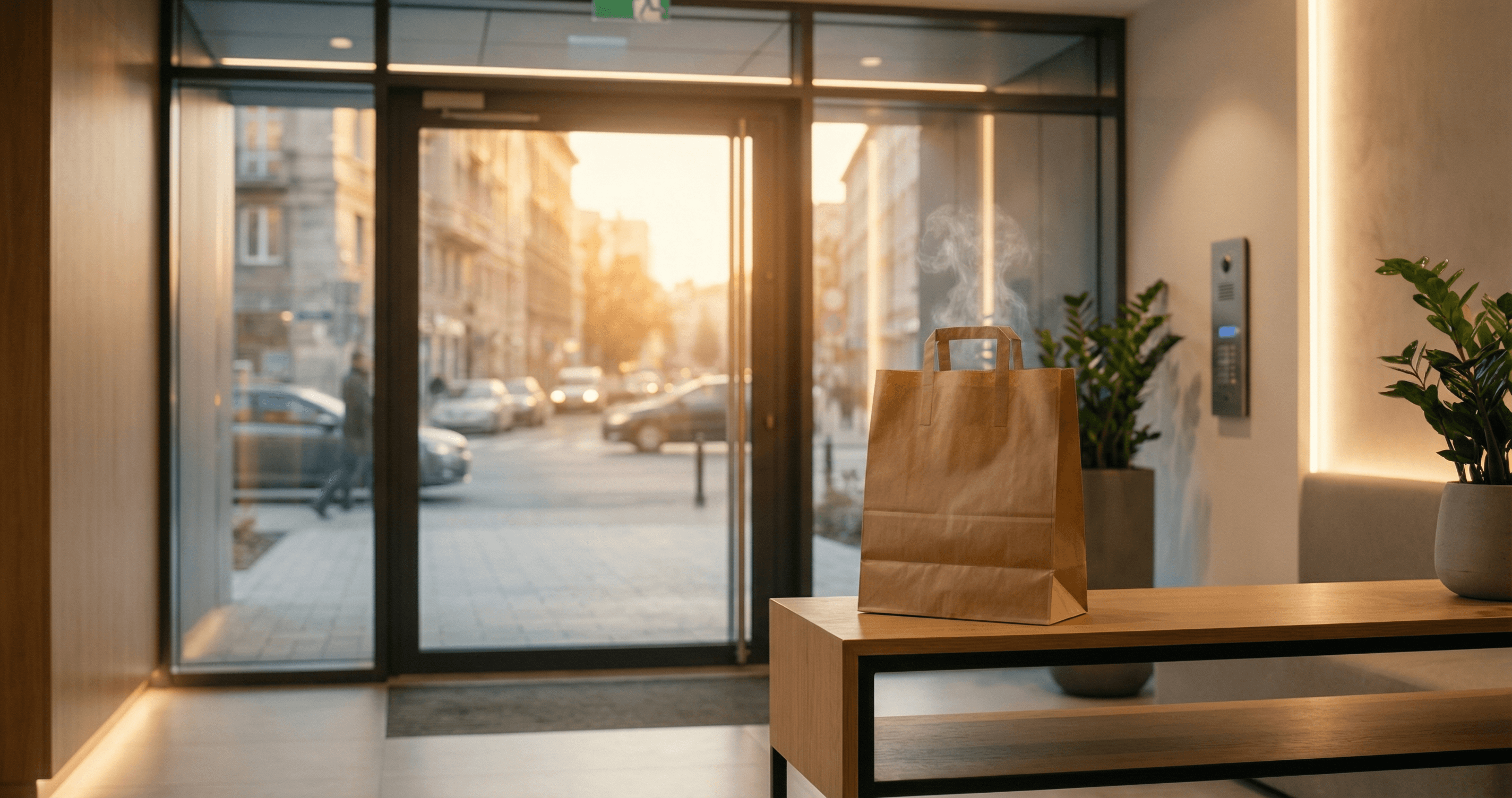
Apartment Food Delivery That Actually Arrives Hot
Apartment food delivery often arrives cold because drivers can't get in. Learn proven fixes for delivery instructions, building access, and food safety.