Apartment Package Theft: 3x Worse Than You Think
Apartment residents are three times more likely to experience package theft than single-family homeowners. Here's how big the problem really is, what to do when it happens, and the prevention strategies that actually work.
Jack Gardner
Founder, Knockli
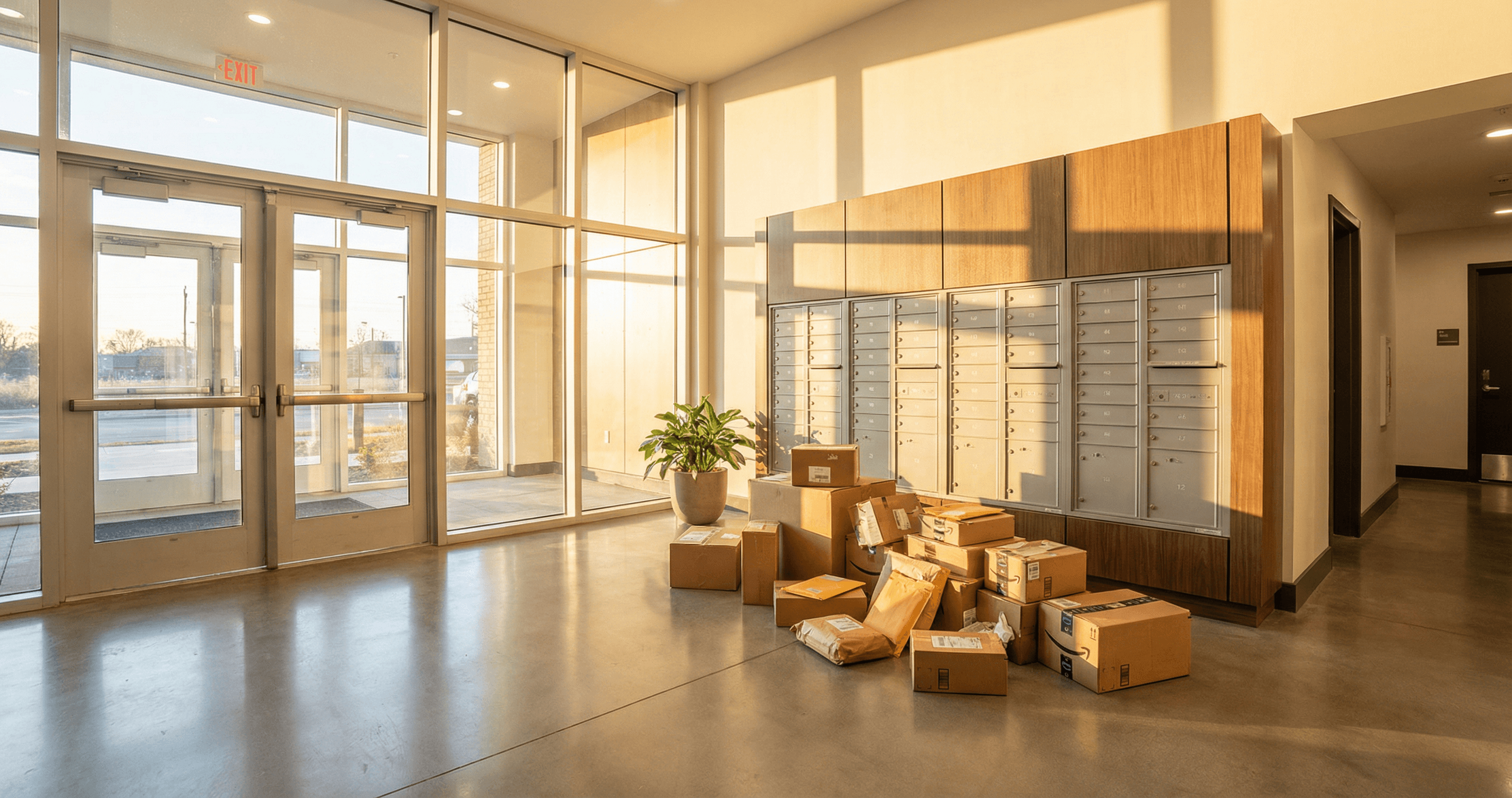
You track a package all week. You watch it move from warehouse to delivery truck to "out for delivery." Then you get home and it's gone. Vanished from the lobby, the mailroom, or right outside your door. If you live in an apartment, apartment package theft isn't just a nuisance. It's a risk you face every single time you order something online.
And the numbers are worse than most people realize. According to Security.org's 2025 annual report, apartment residents are three times more likely to have packages stolen than people living in single-family homes. That's not a small gap. It's a fundamental vulnerability built into how apartment buildings work, and it affects millions of renters every year.
The short version:
- Apartment residents face 3x higher package theft risk than homeowners, with $8 billion in estimated annual losses
- Act fast if a package is stolen: carrier claim, USPS report, police report, insurance check
- Free prevention starts today: delivery instructions, USPS Informed Delivery, signature requirements
- The root cause is building access, and AI-powered screening solves it without hardware installation
The Scale of Apartment Package Theft
Package theft, sometimes called "porch piracy," has grown into a nationwide problem. But the numbers tell a very different story depending on where you live.
According to Security.org, approximately 1 in 4 Americans (roughly 64 million people) have had at least one package stolen. Package theft has increased 36% over the past five years. The average stolen package is worth $222, and total annual losses from package theft are estimated at $8 billion nationwide.
Here's where apartment living changes the equation:
| Factor | Single-Family Home | Apartment Building |
|---|---|---|
| Package theft risk | Baseline | 3x higher |
| Package visibility | Private porch or doorstep | Shared lobby or hallway |
| Delivery access | Direct to your door | Building entry required |
| Surveillance | Personal cameras common | Depends on building |
| Control over delivery area | Full | Limited or none |
The gap makes sense once you think about it. Houses have private porches, personal security cameras, and packages that are only visible to passersby. Apartments have shared lobbies, constant foot traffic from dozens of residents and visitors, and packages that sit in plain sight for hours.
A ValuePenguin survey on porch pirate trends found that the financial impact extends well beyond the stolen item itself. Many victims spend additional time and money filing insurance claims, disputing charges with retailers, and re-ordering products. For frequent online shoppers living in apartments, those costs compound quickly.
If you're already dealing with deliveries that never reach you at all, our guide on strategies to stop missing deliveries covers the other side of this problem.
Why Apartment Buildings Are Easy Targets
The three-times-higher theft rate for apartments isn't random. It's structural. Several features of multi-unit buildings create ideal conditions for package theft.
Shared entrances mean shared risk. In a single-family home, a thief has to walk up to your specific front door. In an apartment building, once someone gets past the main entrance, they have access to every package in the lobby, mailroom, or hallway. One point of entry, dozens of targets.
Packages sit unattended for hours. Most deliveries arrive during the workday, between 10 AM and 5 PM. In a building without a doorman or concierge, those packages sit in the open until residents come home in the evening. That's a window of four to eight hours where anyone walking through can grab a box and leave.
Delivery drivers are under pressure. Carriers like UPS, FedEx, and Amazon deliver hundreds of packages per shift. When they reach an apartment building, they need to get in, drop packages, and move on. They don't have time to wait for individual residents to answer buzzers. The result: packages get left in the most accessible (and least secure) spot available.
Anonymity works in a thief's favor. In a building with dozens or hundreds of units, nobody knows everyone. A porch pirate walking through an apartment building lobby with a box doesn't raise the same suspicion it would on a quiet residential street. They look like just another resident collecting a delivery.
No dedicated staff watching. Unless your building has a full-time doorman or concierge (and most don't), there's no one monitoring who picks up what. Security cameras help after the fact, but they rarely prevent theft in the moment.
What to Do When Your Package Gets Stolen
If a package has already disappeared, act quickly. The sooner you take these steps, the better your chances of getting a refund or replacement.
Verify the delivery status. Check tracking details carefully. Confirm the delivery location, time, and any photo proof the carrier provided. Sometimes "delivered" means it was left at the leasing office, a neighbor's door, or the wrong building entirely.
Ask neighbors and building staff. Check with your building's front desk, maintenance team, or leasing office first. Sometimes a well-meaning neighbor or staff member moved the package to keep it safe without notifying you.
Contact the carrier. File a claim with the delivery company (UPS, FedEx, USPS, or Amazon). Most have straightforward claims processes. Amazon in particular is known for issuing quick replacements for packages confirmed as stolen.
Report mail theft to USPS. If the package was sent through the postal service, report the theft to the U.S. Postal Inspection Service. Mail theft is a federal crime, and USPIS actively investigates these cases.
File a report with the FTC. The Federal Trade Commission recommends reporting package theft, especially if you suspect organized porch piracy in your area. These reports help law enforcement identify patterns and target repeat offenders.
Check your insurance coverage. Renters insurance or credit card purchase protection may cover a package stolen from your apartment lobby. Consumer Reports notes that many consumers don't realize their existing policies already cover this type of loss. Review your coverage and file a claim if the value warrants it.
File a police report. Even if recovery is unlikely, a police report creates official documentation that supports insurance claims and alerts local law enforcement to theft patterns in your building or neighborhood.
Apartment Package Theft Prevention That Works
Preventing theft beats dealing with the aftermath every time. These strategies range from free and immediate to technology-driven, and each one is worth considering based on your situation.
How Can You Prevent Apartment Package Theft for Free?
Add delivery instructions to every account. Every major carrier lets you specify where to leave packages. Be precise: "Leave at leasing office, open until 6 PM" or "Place inside mailroom on the second shelf." Vague instructions get ignored. Specific ones get followed.
Sign up for USPS Informed Delivery. This free service from USPS sends you daily email previews of incoming mail and packages. Knowing exactly what to expect helps you act fast if something doesn't show up.
Require signatures for high-value items. For expensive purchases, pay the small fee for signature-required delivery. It eliminates the risk of valuable packages sitting unattended in your lobby.
Time your orders strategically. Schedule deliveries for days when you or a household member will be home. Use services like Amazon Day to consolidate shipments into fewer delivery events.
Building-Level Changes Worth Requesting
Talk to your property management about smart apartment security options that protect deliveries. Package lockers, secure mailrooms with key-card access, and visible security cameras in delivery areas all reduce theft significantly. Even a locked package room with resident-only access can make a real difference. Solutions like Knockli work at the individual unit level without requiring building-wide investment, which makes them worth exploring if your management is slow to act.
If your building already coordinates access for people like dog walkers or house cleaners, ask whether similar protocols could apply to delivery verification. Our guide on managing service provider access covers how buildings typically handle this.
Technology That Addresses the Root Problem
The core issue behind apartment package theft is access. Delivery drivers need to get into your building, but traditional buzzer systems make that difficult when you're not home. The package ends up in an unsecured lobby instead of at your door, or the driver gives up and takes it back to the depot.
Knockli solves this at the source. When a delivery driver buzzes your unit, Knockli's AI answers the call and has a natural conversation to verify their identity. Once confirmed, the AI can grant building access and provide spoken instructions telling the driver exactly where to leave your package: "Take the elevator to the third floor and leave the package at unit 3B." That level of direction means your delivery ends up at your door, not in a pile of boxes in the lobby where anyone can grab it.
When Smart Technology Fills the Gap
Most apartment buildings weren't designed for the volume of deliveries that modern online shopping generates. The infrastructure hasn't caught up. But you don't have to wait for your building to overhaul its systems.
Knockli works with your existing phone-based buzzer system. There's no hardware to install and no landlord approval needed. Setup takes about 10 minutes: you update the phone number your buzzer dials, and Knockli's AI begins screening visitors and handling deliveries on your behalf.
To understand the full picture of how an AI doorman works, think of it as a 24/7 virtual concierge dedicated to your unit. Every buzzer interaction is logged with a complete transcript, so you can review who called, what they said, and how the system responded. That activity log doubles as a security record if you ever need to investigate a missing delivery.
Knockli also offers quiet hours to block late-night buzzer disruptions. And because household members can share access to the system, everyone in your unit stays informed about deliveries and visitors without needing separate setups.
Here's what makes this approach different from other apartment delivery security strategies. Package lockers require building-wide investment that you can't control. Signature requirements lead to missed deliveries. Written delivery instructions depend on drivers actually reading them. Knockli actively manages the access point, verifying each delivery person through conversation before they enter and directing them to your specific door once they're inside.
For apartment residents dealing with regular package theft, or just the persistent anxiety of knowing your deliveries are sitting unprotected in a shared lobby, having an AI handle the screening and access means one less thing to worry about every time you place an order.
Your packages shouldn't be a gamble. With apartment residents facing 3x the theft risk, billions in annual losses nationwide, and a system that wasn't built for how we shop today, waiting and hoping isn't a strategy. Start with the free steps above, push your building for better infrastructure, and let Knockli handle the part that's hardest to solve on your own: making sure the right people get in and your packages actually reach your door. Set up Knockli in 10 minutes and stop worrying about what's happening in your lobby.
Related Articles
Apartment Delivery Problems Aren't the Driver's Fault
8-20% of apartment deliveries fail because your building wasn't designed for packages. Data analysis of the $17.78-per-failure cost.
Stop Missing Apartment Deliveries: What Actually Works
Tired of missed deliveries? Learn 5 proven strategies apartment dwellers use to ensure packages arrive safely, from smart lockers to AI solutions.
Introducing Knockli: Your AI Doorman Is Here
Knockli is your AI doorman. It answers your apartment buzzer, screens visitors, and handles deliveries automatically. No hardware needed, no landlord approval.