Automate Routine Building Operations Without Adding Staff
NAA research shows property managers spend 66% of their time on routine operations, leaving just 16% for strategic work. Here's how to identify automation opportunities and reclaim the time that actually moves your portfolio forward.
Knockli Team
Product Team
Building the future of smart building access for property portfolios.
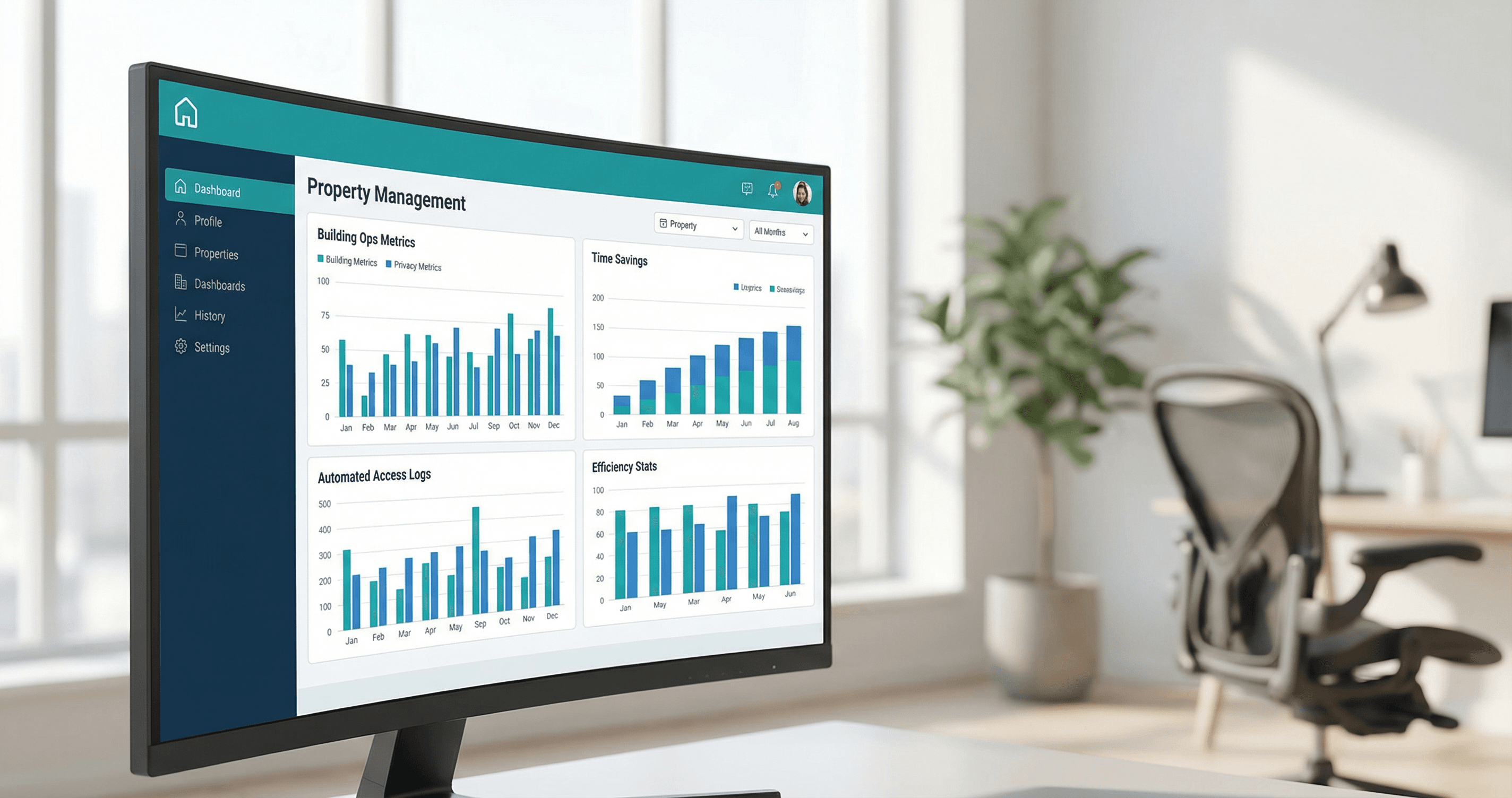
The numbers from recent NAA and AppFolio research are striking: property managers spend 66% of their time on routine operations and reactive work. Strategic performance work—the activities that actually improve your portfolio—gets just 16% of your day.
That's not a time management problem. That's a structural problem.
The routine tasks aren't optional. Someone needs to coordinate vendor access. Someone needs to handle the delivery driver who can't get into the building. Someone needs to field the late-night call about a buzzer issue. But "someone" doesn't have to be you, and it doesn't have to be a new hire either.
This guide breaks down where property manager time actually goes, which routine tasks are automation candidates, and how to reclaim strategic hours without adding headcount.
The 66% Problem
Routine building operations are the recurring, predictable tasks required to keep a property functioning—access coordination, visitor handling, delivery management, vendor scheduling, and complaint resolution. While individually small, they consume the majority of property manager time.
The NAA research frames the challenge clearly: technology implementation has become a top-3 challenge for real estate professionals, surpassing HR and recruitment concerns for the first time. Property managers aren't struggling because they lack technology options. They're struggling because the technology they have doesn't address the right problems, or implementing it creates its own time drain.
Meanwhile, the pressure is intensifying. According to EliseAI's State of AI in Multifamily report, 92% of operators have implemented AI solutions—but 53% are using general-purpose tools like ChatGPT rather than specialized property management AI. The adoption is there. The impact isn't.
Why Routine Operations Expand
Routine work has a way of filling available time. A few factors drive this expansion:
Fragmented systems. When your access system doesn't talk to your property management software, which doesn't talk to your maintenance platform, you become the integration layer. Manual coordination multiplies.
Reactive patterns. Most property managers operate in response mode—handling issues as they arise rather than preventing them. A missed delivery becomes a complaint, which becomes a phone call, which becomes an investigation.
Inconsistent processes. Without clear automation, every visitor, every delivery, and every vendor access request requires a decision. Decision fatigue accumulates.
The result: property managers capable of strategic thinking spend their days on tasks that a well-designed system could handle automatically.
Where Property Manager Time Actually Goes
Before automating anything, it's worth auditing where time currently flows. Based on industry patterns and operator feedback, here's a representative breakdown of routine operations time:
| Category | % of Routine Time | Examples |
|---|---|---|
| Access coordination | 25-30% | Buzzer calls, visitor screening, letting vendors in |
| Resident communication | 20-25% | Responding to complaints, providing updates, fielding questions |
| Delivery management | 15-20% | Coordinating package access, handling missed delivery complaints |
| Maintenance coordination | 15-20% | Scheduling vendors, coordinating access, follow-up |
| Administrative tasks | 10-15% | Documentation, reporting, compliance logging |
The access-related categories (access coordination + delivery management) often represent 40-50% of routine operations time. These are also the categories with the highest automation potential.
The Compounding Effect
Each routine task has follow-on effects. Consider a missed delivery:
- Initial event: Delivery driver buzzes, no one answers, package returned
- Complaint: Resident contacts property management
- Investigation: Manager reviews what happened, tracks down carrier info
- Resolution: Coordinates re-delivery or pickup
- Documentation: Logs the incident for potential pattern review
- Relationship repair: Addresses resident frustration to prevent renewal impact
A single missed delivery can consume 30-60 minutes of staff time across these stages. Multiply by the volume of packages in a modern multifamily building—residents receive 8-10 packages monthly on average—and the operational burden becomes clear.
What Can Actually Be Automated
Not every routine task should be automated. The best candidates share specific characteristics:
High-Volume, Low-Variability Tasks
Tasks that happen frequently and follow predictable patterns are prime automation targets. Examples:
- Delivery driver access: Carriers buzz, need lobby entry, follow standard protocols
- After-hours screening: Late-night calls follow recognizable patterns (legitimate visitors vs. solicitors)
- Scheduled vendor access: Maintenance visits happen at known times with verifiable identity
These tasks don't require human judgment in most cases. A well-designed system can handle them faster and more consistently than a person cycling through interruptions.
Tasks Where Documentation Matters
Automation creates better records than manual handling:
- Who accessed the building and when—useful for security incidents and disputes
- What was communicated to visitors—protects against "he said, she said" complaints
- Patterns over time—identifies recurring issues before they escalate
Human-handled interactions often lack consistent documentation. Automated systems log everything by default.
Tasks That Create Resident Friction
According to Parcel Pending's 2025 Resident Preferences Report, 95% of residents agree that package security is important to them. Delivery handling isn't just an operational convenience—it's a resident satisfaction driver.
Similarly, responsiveness to visitor and access issues influences how residents perceive their building. Automation that handles these interactions instantly outperforms human response times, which depend on staff availability and competing priorities.
The Building Access Automation Opportunity
Building access represents one of the highest-impact automation opportunities for property managers. The reasons:
Volume
Your buildings process dozens to hundreds of access requests daily:
- Package deliveries from multiple carriers
- Food delivery services (DoorDash, Uber Eats, etc.)
- Resident guests and family visitors
- Maintenance and vendor visits
- After-hours legitimate entries
- Solicitors and unwanted visitors (which still require handling)
Each interaction currently requires either resident involvement, staff involvement, or no handling at all (which creates security and satisfaction gaps).
Predictability
The vast majority of access requests follow recognizable patterns. A delivery driver saying "I have a package for unit 4B" is not a complex screening challenge. An AI system can verify the claim, grant access, notify the resident, and log the interaction—all in seconds.
Impact
Buildings that implement access automation commonly report:
- 80-90% reduction in delivery-related complaints (the "sorry we missed you" problem disappears)
- Significant decrease in after-hours escalations to on-call staff
- Better documentation for dispute resolution and compliance
- Improved resident satisfaction scores on responsiveness and security
For a deeper look at after-hours automation specifically, see our guide on handling after-hours building access without staff.
What Access Automation Looks Like
Modern access automation uses AI to intercept and handle buzzer calls. Here's the flow:
- Visitor buzzes a unit → Call routes to AI system instead of resident phone
- AI screens the visitor → Natural conversation to identify who they are and why they're there
- Policies applied → System checks rules for time of day, visitor type, and building preferences
- Action taken → Auto-unlock for verified deliveries, notify resident for guests, decline solicitors
- Everything logged → Complete audit trail with timestamps and outcomes
This works with existing phone-based call boxes—no hardware replacement required. Setup typically takes 10-15 minutes per building.
Avoiding the Implementation Trap
Here's the meta-problem: the NAA research shows technology implementation is itself a top challenge. Adding automation shouldn't create a new time sink.
Look for solutions that meet these criteria:
Minimal Deployment Friction
If implementation requires:
- Hardware purchases and installation
- Electrician appointments and building permits
- Weeks of configuration and testing
- Extensive resident onboarding
...you've traded one time problem for another. The best automation deploys fast and starts working immediately.
Software-first solutions that work with existing infrastructure (like phone-based intercoms) avoid most deployment friction. For details on this approach, see our guide on modernizing building access without hardware.
Sensible Defaults
The system should work out of the box with intelligent defaults. You shouldn't need to configure 47 settings before it handles a delivery driver correctly.
Look for natural language configuration—"Let Amazon deliveries in before 8 PM and notify the resident" should be easy to set up, not a multi-step wizard.
Portfolio Scalability
If you manage multiple properties, avoid solutions that require per-building customization from scratch. Portfolio-level dashboards with templating let you roll out proven configurations across buildings quickly.
Staff Adoption
Your onsite teams need to understand and trust the system. The RentVision research on technology adoption emphasizes that organizational misalignment—executives excited about new tools while onsite teams are unprepared—hinders adoption.
Choose solutions that are transparent about what they're doing and why. Staff should be able to see activity logs, understand the rules being applied, and override when necessary.
Measuring Reclaimed Time
Once automation is in place, track these metrics to validate impact:
Direct Time Savings
Buzzer interruptions per day: How many calls previously went to staff or residents that are now handled automatically?
Complaint resolution time: When delivery or access issues arise, how long does resolution take? Automation with good logging should dramatically reduce investigation time.
After-hours escalations: How many late-night or weekend calls require human intervention? This should decrease significantly.
Indirect Benefits
Resident complaint volume: Access-related complaints should drop. Track month-over-month trends.
Staff satisfaction: Are your property managers feeling less reactive? Do they have time for proactive building improvements?
Resident satisfaction scores: If you track NPS or other metrics, watch for improvements in responsiveness and security categories.
The Strategic Time Test
The ultimate measure: are you actually using reclaimed time for strategic work?
Strategic work includes:
- Proactive resident engagement (retention-focused outreach)
- Capital improvement planning
- Staff development and training
- Process optimization
- Owner/investor relationship management
- Market analysis and competitive positioning
If automation frees up hours but those hours just fill with other routine tasks, the value proposition breaks down. Protecting strategic time requires intentional scheduling, not just capacity.
Getting Started
For property managers ready to explore building access automation:
Quick Assessment
Answer these questions about your portfolio:
- What percentage of your day involves access coordination? (buzzer calls, delivery issues, vendor access)
- Do your buildings use phone-based intercoms? (the kind that call a phone number when someone buzzes)
- How many after-hours escalations do you handle weekly?
- What's your current delivery-related complaint volume?
If access coordination consumes significant time and your buildings have phone-based systems, you're well-positioned for automation that deploys quickly and delivers measurable results.
Evaluation Criteria
When assessing solutions, prioritize:
- Deployment speed: Can you be live in days, not months?
- Hardware requirements: Zero is better than "minimal"
- Configuration approach: Natural language beats complex programming
- Portfolio support: Central dashboard for multi-building management
- Documentation: Automatic logging and exportable audit trails
- Support model: Responsive help when questions arise
For a comprehensive evaluation framework, see our building access technology evaluation guide.
The Bottom Line
The 66% problem isn't inevitable. Property managers spend the majority of their time on routine operations because that's what their current systems demand. But the tasks that consume the most time—access coordination, delivery handling, after-hours screening—are also the most automatable.
The technology exists to handle these interactions intelligently, instantly, and at scale. The barrier isn't capability; it's implementation complexity. Software-first approaches that work with existing infrastructure remove that barrier.
For portfolios struggling with the routine-vs-strategic balance, building access automation represents one of the clearest opportunities to reclaim meaningful time. The math is straightforward: if access-related tasks consume 40-50% of your routine operations, and automation handles 80-90% of those tasks, you've recovered significant hours every week.
Those hours can stay filled with reactive work. Or they can become the strategic time your portfolio actually needs.
Ready to automate building access across your portfolio? Learn how Knockli works for property managers—from delivery automation to after-hours management, with zero hardware requirements and 10-minute setup per building.
Related Articles
Property Management AI: Why 66% Haven't Started Yet
AI adoption in property management jumped from 21% to 34% in one year. Why two-thirds of managers are stuck and how to start.
AI Doorman for Property Managers: What It Is and Why It Works
An AI doorman handles building access 24/7 without staff. Learn how it works, what it costs, and why property managers are adopting it.
Building Access Projects That Stall: Keep Yours Moving
Technology implementation is a top-3 challenge for property managers. Five reasons building access projects stall and how to avoid them.