Property Management AI: Why 66% Haven't Started Yet
AI adoption in property management surged from 21% to 34% in a single year, yet two-thirds of managers haven't started. The barrier isn't awareness. It's knowing where to begin. Here's what's actually holding adoption back and a practical framework for your first 90 days.
Knockli Team
Product Team
Building the future of smart building access for property portfolios.

Property management AI adoption hit 34% in 2025, up from 21% just a year earlier. That growth sounds impressive until you flip the number: two-thirds of property managers still haven't started. The gap isn't about skepticism. According to NAA and AppFolio research, technology implementation has become a top-3 challenge for multifamily leaders, ranking alongside rising costs and occupancy pressure. Most property managers believe AI can help. AI property management implementation is where they get stuck.
This article breaks down what's actually preventing adoption and offers a practical framework for managers ready to cross that line.
The AI Adoption Numbers Tell Two Stories
The headline story is acceleration. Property management firms are adopting AI faster than almost any previous technology wave. JLL's 2025 Global Real Estate Technology Survey found that 92% of real estate organizations are now piloting AI in some form.
The second story is buried in the details: only 5% of those organizations report achieving meaningful results. That's a staggering gap between experimentation and execution. MRI Software's 2025 AI in CRE survey captures the disconnect precisely: 45% of commercial real estate professionals understand AI's potential, yet only 28% have implemented it in any operational capacity.
For property managers specifically, the trajectory is clear but uneven. The 34% who have adopted are pulling ahead in operational efficiency, resident satisfaction, and cost control. The 66% who haven't are watching costs climb (39% now cite rising insurance as a top concern, up from 29%) while occupancy concerns have grown to affect 43% of managers.
The question isn't whether AI belongs in property management. It's why so many managers who agree it does still haven't made the move.
What's Actually Blocking AI Adoption in Property Management
The barriers to AI adoption in property management aren't what most people assume. It's not fear of robots replacing jobs, and it's not budget alone. Research points to five interconnected obstacles.
Data quality and system fragmentation
This is the single biggest barrier. AI models need structured, clean data to produce useful outputs. Most property management operations run on a patchwork of systems: one for leasing, another for maintenance, a third for accounting, spreadsheets filling the gaps between them. When Realcomm reported on data readiness challenges, the core finding was blunt: AI can't fix bad data. If your systems don't talk to each other, AI tools that depend on cross-system data will underperform from day one.
This doesn't mean you need perfect data to start. It means you should choose AI tools that work within a single domain rather than tools that require your entire tech stack to be integrated first.
Vendor confusion and PropTech fatigue
Property managers are drowning in vendor pitches. Blueprint Insights research found that 83% of property managers feel overwhelmed by PropTech vendor outreach, and 67% say vendors consistently overpromise and underdeliver. When every product claims to be "AI-powered," it becomes nearly impossible to distinguish genuine capability from marketing language.
This fatigue creates paralysis. Rather than risk choosing wrong, many managers choose not to choose at all. The result is that the technology landscape, which should accelerate adoption, actually slows it down.
Budget pressure in the wrong direction
Rising operational costs should drive technology adoption, but they often have the opposite effect. When insurance premiums spike and occupancy dips, the instinct is to cut discretionary spending. Technology investment gets categorized as discretionary even when it would reduce the very costs creating the pressure. If you're managing building access technology projects that stall, budget timing is frequently the root cause.
Staff resistance and training overhead
On-site teams are already stretched thin. Introducing new technology means training time, workflow changes, and an adjustment period where productivity temporarily drops. For managers spending 66% of their time on routine operations, finding time to learn new tools feels impossible. The irony is thick: the people who would benefit most from automation are too busy with manual work to implement it.
Compliance and data privacy uncertainty
AI systems that process resident data raise legitimate questions about privacy, consent, and regulatory compliance. Property managers in states with biometric privacy laws or cities with tenant data protection ordinances face real legal considerations. Without clear internal guidelines, many managers default to caution, which means no adoption.
Where AI Is Already Working in Building Operations
Not every AI application requires enterprise-grade data infrastructure or months of implementation. Some categories are producing results right now, with minimal setup complexity.
Visitor management and access control. AI-powered screening handles building entry without requiring staff presence. Systems can verify delivery drivers, screen unknown visitors through natural conversation, and apply time-based or policy-driven rules automatically. This category works well as a first AI deployment because it operates within a single domain (building access) and doesn't require integration with leasing or accounting systems. Solutions like Knockli demonstrate this approach: AI that works with existing phone-based intercoms, requires no hardware changes, and deploys in minutes rather than months.
Tenant communication automation. AI handles routine inquiries (maintenance request status, lease renewal questions, amenity hours) through chat or voice. This reduces the 5+ hours per week many managers spend on repetitive communication. The data requirements are relatively simple since the AI draws from a defined knowledge base rather than needing real-time cross-system data.
Maintenance prediction. Building systems generate data continuously. AI can identify patterns that predict equipment failures before they become emergencies. HVAC systems, elevators, and plumbing are common targets. This requires sensor data or maintenance log history, which makes it moderately complex to implement.
Lease fraud detection. AI-powered screening can identify application fraud patterns that manual review misses. With 23.8% of eviction filings tied to fraud or misrepresented applications, this has direct financial impact. Implementation complexity varies by platform.
Package management. Buildings receive an average of 150 packages per week (270 during holidays). AI can automate delivery verification, resident notification, and access decisions for carriers. This integrates naturally with access control systems and addresses one of the top resident amenity demands.
A Practical Framework for Your First 90 Days
If you're in the 66% who haven't started, the path forward isn't a massive digital transformation. It's picking one high-impact, low-complexity use case and proving value before expanding.
Days 1-15: Choose your first use case
Pick a single operational area where:
- The pain is obvious. Your team complains about it regularly, or residents file complaints about it
- The data is contained. The AI tool doesn't need to pull from multiple disconnected systems
- The impact is measurable. You can track before-and-after metrics (time saved, complaints reduced, costs avoided)
- The setup is minimal. Days or weeks to deploy, not months
Building access and visitor management frequently scores highest on this matrix. The pain is obvious (after-hours calls, missed deliveries, staff interruptions), the data is contained (access events within one system), the impact is measurable (complaint volume, response time), and modern solutions deploy without hardware installation.
Days 15-30: Run a focused pilot
Deploy in a single building or a subset of units. Define success metrics before you start. Track:
- Time your team reclaims from the automated task
- Resident satisfaction signals (complaint volume, survey feedback)
- Direct cost changes (reduced staff overtime, fewer service calls)
- System reliability (uptime, accuracy of AI decisions)
A focused pilot limits risk while producing the data you need to justify expansion. This is also where you learn what proving the ROI of building access technology actually looks like with your specific portfolio and cost structure.
Days 30-60: Measure and adjust
Compare pilot results against your baseline. Look for patterns:
- Which AI decisions needed human override? (This tells you where rules need refinement)
- What questions did residents or staff have? (This informs your communication strategy for wider rollout)
- Where did the tool exceed expectations? (This becomes your internal business case)
Days 60-90: Expand or pivot
If the pilot succeeded, expand to additional buildings with the confidence of real performance data. If it fell short, you have specific information about why, which is infinitely more useful than theoretical concerns.
The property managers pulling ahead aren't the ones who deployed the most sophisticated AI. They're the ones who started with a single, practical application and built from there.
The Cost of Staying in the 66%
Waiting has its own cost, and it compounds. Every month without automation, your team absorbs the same manual workload. Every quarter without AI-driven screening, your buildings handle visitor management the same way they did a decade ago.
Meanwhile, the 34% who have adopted are learning. They're refining their AI configurations, training their teams on AI-assisted workflows, and building institutional knowledge that will be difficult for late adopters to replicate quickly. Deloitte's analysis of AI implementation in real estate highlights that organizations with early AI experience have significantly shorter deployment cycles for subsequent tools.
The competitive pressure is real. As AI doorman solutions gain traction in property management, buildings that offer intelligent access management become more attractive to prospective residents. With 35% of renters planning to move within the next 12 months and turnover costing roughly $4,000 per unit, the buildings that differentiate on technology are better positioned to attract and retain residents.
Moving From Awareness to Action
The AI adoption gap in property management is not a technology problem. It's a starting problem. The tools exist. The data supporting their value is clear. The barriers, while real, are navigable when you approach adoption as a focused experiment rather than a wholesale transformation.
Pick one operational pain point. Deploy one AI tool that addresses it. Measure the results. Then decide what comes next.
Building access is one of the highest-impact, lowest-complexity places to start with AI in property management. Knockli's AI-powered access management works with your existing intercom system, deploys in under 15 minutes per building, and requires zero hardware. See how it works for property managers.
Related Articles
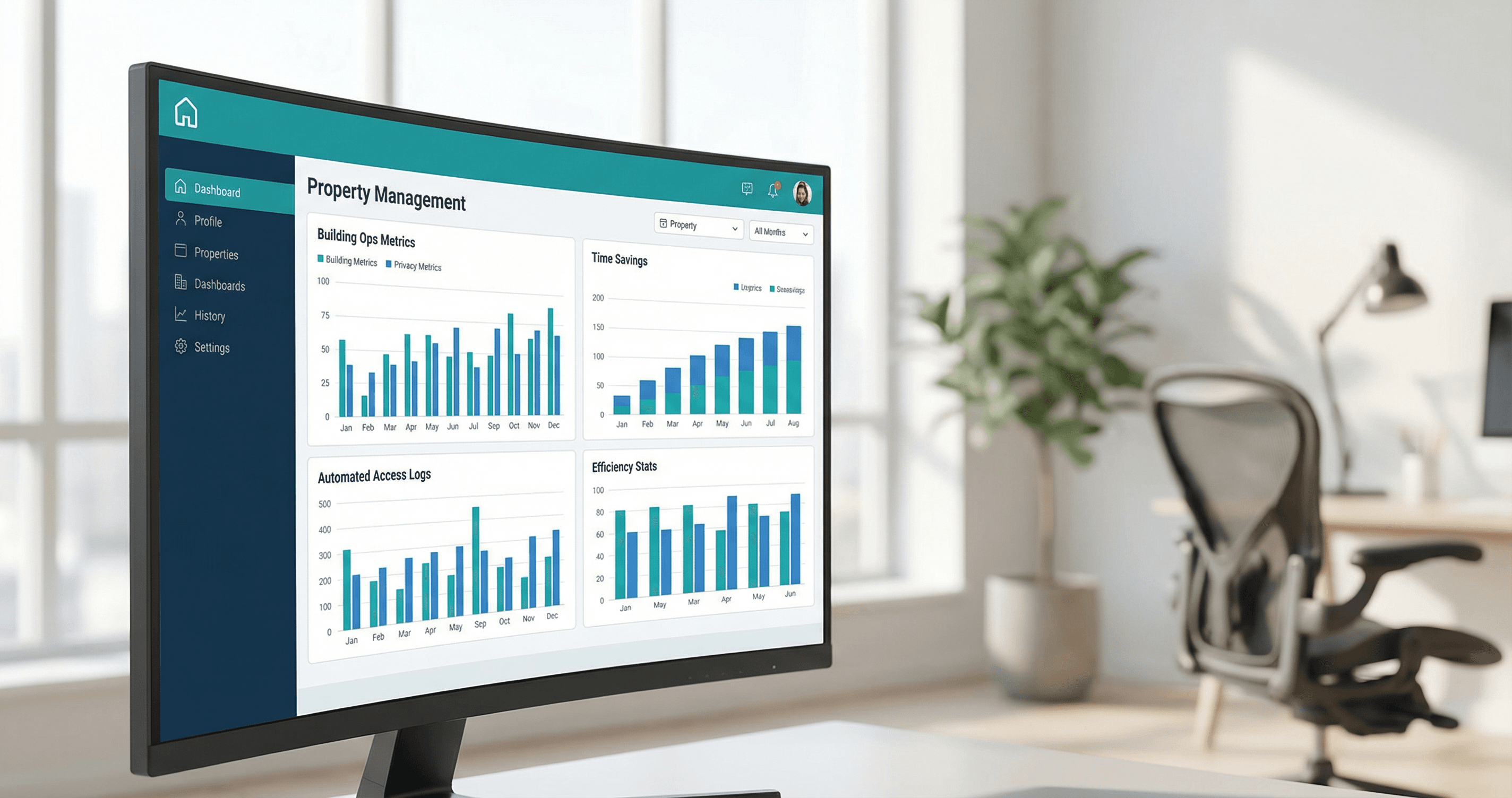
Automate Routine Building Operations Without Adding Staff
Property managers spend 66% of time on routine operations. Learn which tasks can be automated to reclaim strategic time without increasing headcount.
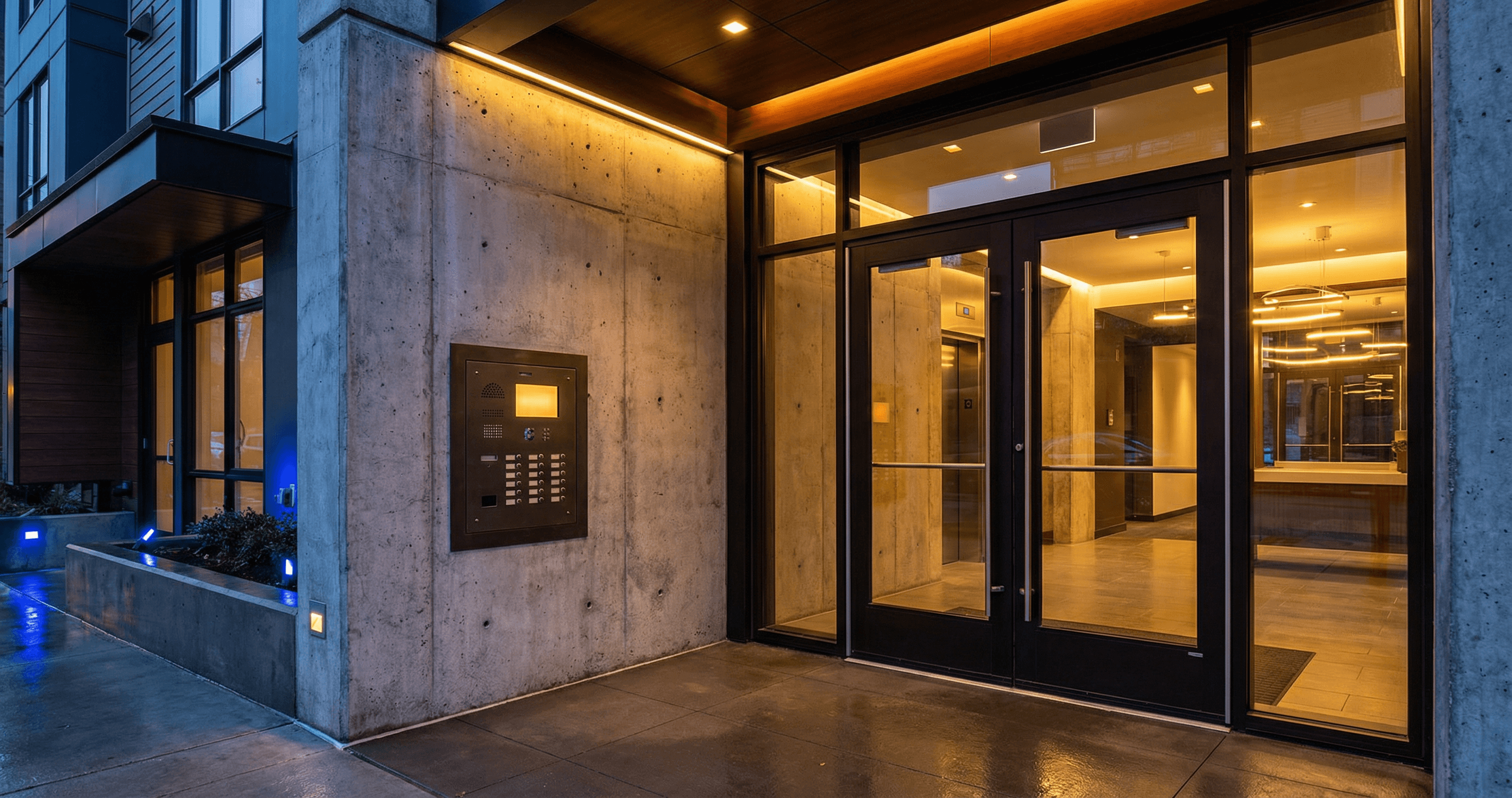
Smart Building Access: Breaking the 16% Adoption Ceiling
76% of multifamily properties still rely on traditional keys despite 72% planning upgrades. What blocks smart access adoption.

Building Access Projects That Stall: Keep Yours Moving
Technology implementation is a top-3 challenge for property managers. Five reasons building access projects stall and how to avoid them.