Renter Technology Expectations Reshaping Multifamily Leasing
Multiple surveys covering 172,000+ apartment renters tell a consistent story: technology expectations are now leasing criteria. From high-speed internet to smart home features to package management, here's what the data says property managers should prioritize in 2026.
Knockli Team
Knockli
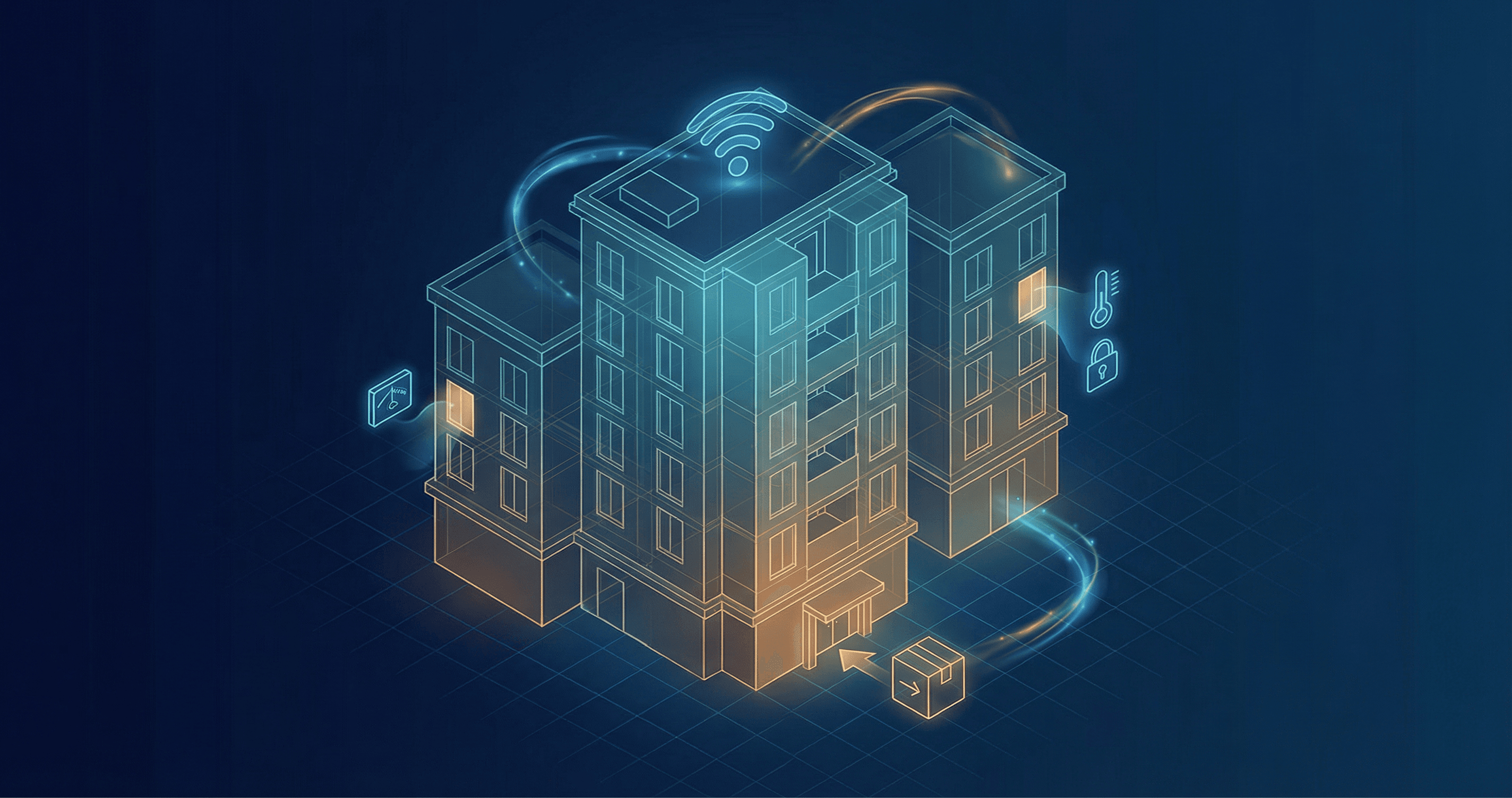
Multiple surveys covering more than 172,000 apartment renters paint a clear picture: renter technology expectations have moved from "nice to have" to "deal breaker." The data from NMHC/Grace Hill, Parks Associates, and AppFolio all point in the same direction. Renters are choosing apartments based on technology, and buildings that fall short are losing leases to those that deliver.
This isn't a prediction. It's already happening. High-speed internet, smart home features, and package management have become leasing criteria on par with location and price. For property managers weighing their next multifamily technology investment, the question is no longer whether to invest. It's where to invest first.
Here's what the survey data reveals, and what it means for your 2026 budget.
Connectivity Is Non-Negotiable
Internet access has quietly become the single most important technology factor in apartment leasing. According to the NMHC/Grace Hill Renter Preferences Survey of 172,703 respondents, 91.7% of renters consider high-speed internet important when choosing where to live. No other technology feature comes close to that number.
The same data shows that 74.8% of renters want internet service pre-installed and ready at move-in. They don't want to call an ISP, schedule an installation appointment, and deal with days of downtime between moving in and getting online. They expect connectivity to work from day one.
Remote and hybrid work have amplified this expectation. When your apartment doubles as your office, unreliable internet isn't an inconvenience. It's a reason to move.
As NMHC's analysis of managed Wi-Fi trends shows, community-wide Wi-Fi coverage is also climbing the priority list. About 70% of renters now expect reliable connectivity in common areas, lobbies, and amenity spaces. Not just in their unit.
For property managers, the implication is straightforward. Managed Wi-Fi is becoming table stakes for competitive leasing. Buildings that still leave internet entirely to residents and third-party ISPs are creating friction at the exact moment they should be creating a seamless move-in experience.
If your building doesn't offer reliable, pre-installed connectivity, you're starting the leasing conversation at a disadvantage.
Smart Home Features Renters Actually Want
Smart home technology has crossed from novelty to expectation. According to Parks Associates research, 84% of renters who don't currently have smart home technology say they want it. That's not a niche preference. That's mainstream demand.
But not all smart features carry equal weight. Survey data from SatisFacts and J Turner Research shows clear priorities:
- Smart thermostats: 70.5% of renters rank this as their top desired in-unit feature
- Smart lighting: 66.9% want automated or app-controlled lighting
- Smart locks and keyless entry: 60 to 63% prioritize this, with SatisFacts reporting 60.1% specifically wanting keyless access
- Online payment systems: 85.2% consider this important (the highest-rated tech feature overall)
The financial case is equally clear. Parks Associates found that properties with smart home amenities report 23% higher resident satisfaction. And the revenue opportunity is real: research cited by Parks Associates shows that smart home technology can increase rental fees by up to 30%.
That satisfaction boost has a direct connection to retention. According to AppFolio's 2025 renter preferences report, 73% of renters satisfied with their property's technology are more likely to renew their lease. When you consider that resident turnover costs an average of $4,000 per unit, the math on smart building amenities as a leasing advantage becomes hard to ignore.
Package Delivery Is a Leasing Decision
Package management may be the most underestimated factor in leasing today. According to research from Parcel Pending and NAA, 85% of renters say package delivery convenience influences their leasing decision. That puts package infrastructure in the same tier as fitness centers and in-unit laundry for competitive differentiation.
The volume driving this preference is significant. Package delivery to multifamily properties has grown by approximately 150% since 2015, and the trajectory continues upward. Modern renters receive 8 to 10 packages per month on average.
Consider the operational reality. A 200-unit building with residents averaging 9 packages monthly processes roughly 1,800 deliveries per month. That's about 60 delivery interactions per day, each one requiring some form of building access.
The resident experience chain matters. When a delivery driver buzzes and can't get access, the package goes back to the carrier. The resident gets a "sorry we missed you" notice. They contact property management. Your team investigates. This cycle wastes time for everyone and erodes satisfaction with every recurrence. For strategies on breaking this cycle, see our guide on reducing resident complaints through access management.
Buildings with reliable delivery access, whether through smart lockers, staffed lobbies, or automated entry systems, solve this problem at the source. The 85% leasing influence figure tells you renters are already factoring package convenience into their apartment search. If your building doesn't have a clear answer to "how do my packages get delivered?", prospects will find one that does.
Where Renter Technology Expectations Outpace Reality
The data on what renters want is clear. The data on what they're actually getting reveals a significant disconnect.
According to Parks Associates, only 13% of apartment residents currently have in-unit smart amenities. Compare that to the 84% who say they want smart home technology, and the scale of the opportunity becomes obvious.
Here's how renter expectations stack up against current industry adoption:
| Technology | Renter Demand | Current Adoption | Gap |
|---|---|---|---|
| High-speed internet | 91.7% consider important | ~60% offer managed Wi-Fi | Moderate |
| Smart thermostats | 70.5% want | ~15% of units equipped | Large |
| Keyless/smart locks | 60-63% want | ~12% of units equipped | Large |
| Package management | 85% influences leasing | ~35% have smart lockers | Moderate |
| Smart lighting | 66.9% want | Under 10% of units equipped | Very Large |
| In-unit smart amenities (any) | 84% want | 13% have | Very Large |
Sources: NMHC/Grace Hill, Parks Associates, SatisFacts, J Turner Research, AppFolio
This gap represents both a challenge and an opportunity. For property managers, it means most of your competitors haven't caught up to renter expectations either. The buildings that close this gap first gain a measurable leasing advantage.
The good news: not every upgrade requires a capital project. Some of the highest-impact improvements, like building access modernization, can be implemented through software without replacing existing hardware. For a practical approach, see our guide on how to modernize building access without hardware replacement. Solutions like Knockli add AI-powered visitor screening and delivery handling to existing intercom systems in minutes, not months, giving property managers a fast path to closing the access technology gap.
Renter Technology Investment Priorities for 2026
The survey data points to a clear priority framework for multifamily technology investment in 2026. Not every building can do everything at once, but the data suggests where to start.
Priority 1: Connectivity infrastructure. With 91.7% of renters rating internet as important and 74.8% wanting it pre-installed, managed Wi-Fi offers the broadest impact. If you can only make one investment this year, start here.
Priority 2: Smart access and package management. These two categories affect daily resident experience and directly influence leasing decisions (85% for packages, 60%+ for keyless entry). They also tend to have the fastest implementation timelines and clearest ROI. Software-first access solutions (like Knockli for intercom-based buildings) can deploy same-day with no hardware changes, making them low-risk starting points. For guidance on evaluating your options, see our building access technology evaluation guide.
Priority 3: In-unit smart features. Smart thermostats and lighting carry strong resident demand, but they require per-unit investment and longer rollout timelines. Best suited for unit turns and renovations where the cost can be absorbed into the capital budget.
The ROI context supports this sequence. Consider these data points together:
- 73% of tech-satisfied residents are more likely to renew (AppFolio)
- Up to 30% rent premium for units with smart features (Parks Associates)
- 23% higher satisfaction from smart amenities (Parks Associates)
Property managers who position smart building amenities as leasing tools, not just operational upgrades, can build a stronger case for ownership approval. The data shows residents will pay more, stay longer, and report higher resident satisfaction when smart home technology meets their expectations.
The gap between what renters expect and what buildings deliver won't stay open forever. The properties that move first on technology will capture the leasing advantage while competitors are still planning.
Building access is one of the fastest starting points. It touches every resident daily, requires no construction, and delivers measurable results in weeks.
Looking to modernize building access for your portfolio? See how Knockli works for property managers, with AI-powered visitor screening, delivery automation, and portfolio management that deploys in minutes.
Related Articles
Apartment Access Control Without the Capital Expense
76% of apartment buildings still use physical keys. See how software-first access control delivers modern security without six-figure hardware costs.
Smart Building Access: Breaking the 16% Adoption Ceiling
76% of multifamily properties still rely on traditional keys despite 72% planning upgrades. What blocks smart access adoption.
Building Access Upgrades Driven by Lockouts, Not Break-Ins
NAA/KeyTrak research shows zero property managers cited security as a reason for smart access adoption. Lockouts, rekeying, and standardization drive upgrades.