Smart Building Privacy: What Apartment Tech Actually Tracks
Only 9% of renters fully trust smart building technology. Here's what apartment systems actually collect about you, what legal protections exist, and how to evaluate building tech privacy before signing your next lease.
Knockli Team
Building Access Intelligence
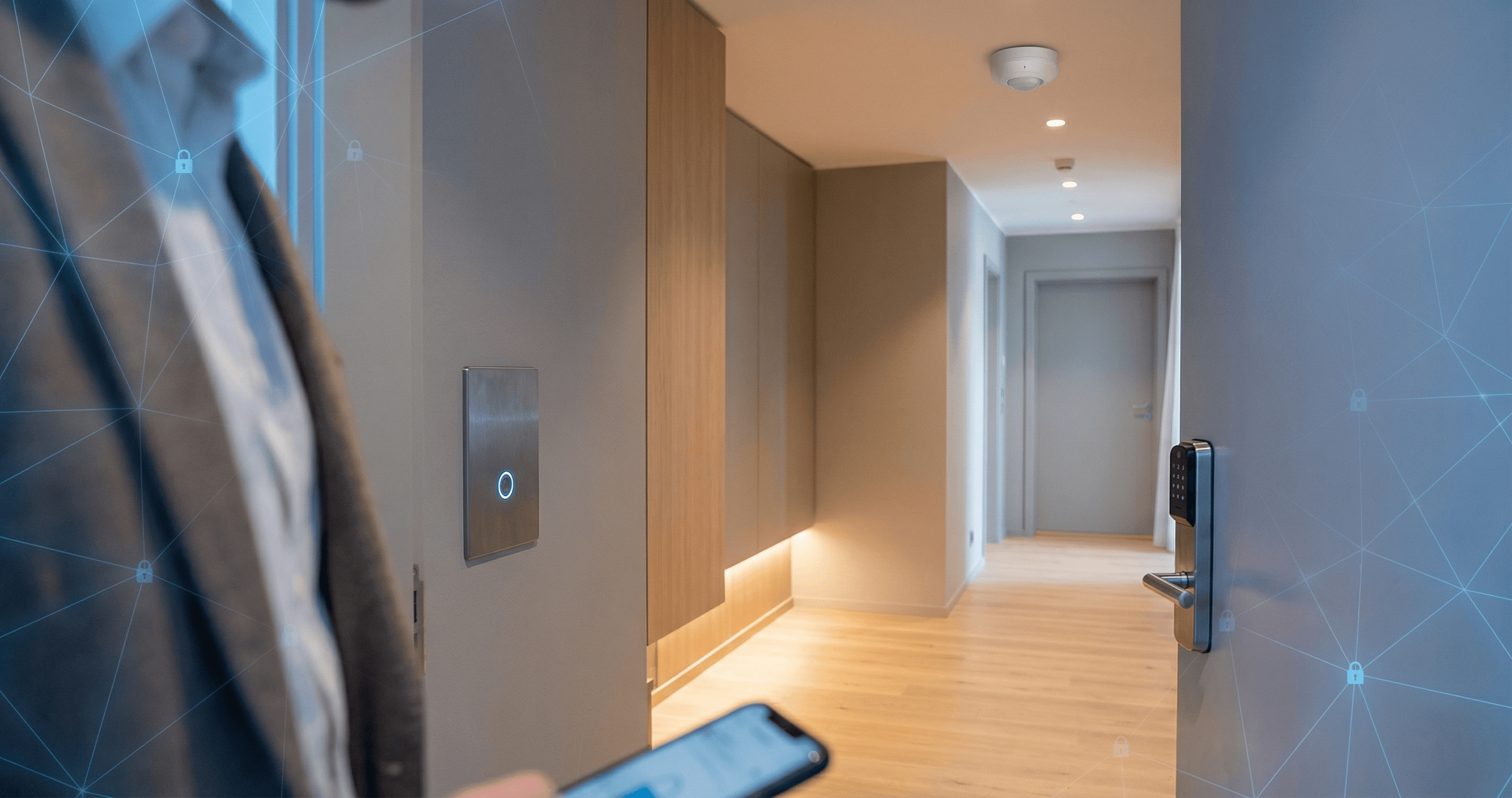
Smart building privacy refers to the data apartment technology collects about residents and the legal protections governing how that data is stored, shared, and used. Only 9% of renters fully trust smart building technology, yet 54% expect it in their next apartment.
That tension defines modern apartment living. You want the convenience of smart locks, video intercoms, and automated package handling. But you also want to know what those systems are recording about you, who has access to that data, and what happens to it after you move out.
According to Rently's 2025 Smart Apartment Trends Report, 35% of apartment residents specifically worry about unauthorized monitoring through building technology. Another 32% fear smart lock malfunctions. These aren't abstract concerns. In December 2025, the ACLU filed a lawsuit against San Francisco landlords over allegations that forced smart home installations constituted surveillance without adequate consent.
This article breaks down what apartment technology actually collects, where the line sits between security logging and surveillance, what legal protections exist, and how to evaluate smart building privacy before signing your next lease.
What Smart Building Systems Actually Collect
Not all smart building technology collects the same type or volume of data. The distinction matters, because your AI doorman system operates very differently from the smart thermostat in your unit.
Here's what common apartment technologies track:
| Technology | What It Collects | Data Sensitivity | Typical Retention |
|---|---|---|---|
| Smart locks | Entry/exit timestamps, access codes used, failed attempts | Medium: reveals presence patterns | 30-90 days |
| Video intercoms | Facial images, video footage, visitor audio | High: biometric and visual data | 7-30 days |
| Audio-only intercoms | Visitor voice recordings, call timestamps | Low-Medium: no visual identification | 7-30 days |
| Smart thermostats | Temperature settings, occupancy detection, usage schedules | Medium: infers when you're home | Indefinite |
| Package lockers | Delivery timestamps, package size, pickup times | Low: logistics data only | 30 days |
| Common area cameras | Movement through shared spaces, timestamps | Medium-High: tracks building movement | 14-30 days |
| Access control (fobs/cards) | Building entry/exit, specific door usage, timestamps | Medium: reveals daily routines | 60-180 days |
The critical distinction is between data that identifies you and data that logs events. A package locker noting that a delivery arrived at 2:14 PM is fundamentally different from a video intercom storing a high-resolution image of your face every time you enter the building.
Smart thermostats illustrate a less obvious privacy concern. While they seem innocuous, occupancy sensors can infer whether you're home, when you sleep, and how many people are in your unit. As CNET's coverage of landlord-installed smart home technology notes, these devices can build detailed occupancy profiles from temperature and humidity data alone, and regulations around this kind of data collection are still catching up to deployment.
What about data from building access systems?
Building access systems like key fobs, smart locks, and intercom call logs primarily create security-purpose records. When someone buzzes your apartment, the system logs the time, duration, and outcome. When you tap your fob to enter, it records the timestamp and door.
This type of logging serves a legitimate security function. If a break-in occurs at 3 AM, the access log identifies who entered the building and when. The question isn't whether this data should exist. It's how long it's kept, who can access it, and whether it's used for purposes beyond security.
The Difference Between Access Logging and Surveillance
Access logging and surveillance collect similar types of data but serve fundamentally different purposes. Understanding the distinction helps you evaluate whether your building's technology is protecting you or monitoring you.
Access logging creates a record of security-relevant events: who entered, when, and through which door. The purpose is safety and accountability. Data is typically retained for a defined period, accessible only to building management for specific security reasons, and deleted on a schedule.
Surveillance uses the same data points for behavioral profiling: tracking daily patterns, monitoring how often you have guests, flagging unusual activity, or sharing data with third parties. The purpose extends beyond security into monitoring behavior.
The line between the two often comes down to three factors:
-
Retention period. Security logs retained for 30 days serve a different purpose than movement data kept indefinitely. The longer data is stored, the more it resembles a behavioral record rather than a security log.
-
Access controls. Who can view the data? If only the property manager and building security can access entry logs for incident investigation, that's logging. If a property management company aggregates data across buildings to create occupancy analytics, that's closer to surveillance.
-
Third-party sharing. Data that stays within the building's security infrastructure serves residents. Data sold to or shared with marketing companies, insurance providers, or data brokers serves someone else's interests.
Privacy-first building technology keeps these boundaries clear. Audio-only systems like Knockli handle visitor screening through voice conversations rather than video, avoiding the collection of facial or biometric data entirely. The distinction matters, because once biometric data is collected, it triggers a different category of legal protections and risks.
Your Smart Building Privacy Rights as a Renter
Tenant privacy protections for smart building technology are evolving rapidly, but several concrete legal frameworks already exist. Here's what currently protects you.
NYC Tenant Data Privacy Act
New York City's Tenant Data Privacy Act is the most comprehensive tenant-specific technology privacy law in the United States. It requires building owners who deploy smart access systems to:
- Disclose what data is collected and how it will be used before installation
- Provide a written privacy policy explaining data retention periods
- Limit data use to the purposes stated in the disclosure
- Allow tenant access to their own data upon request
- Restrict third-party sharing without explicit consent
If your building is in NYC and has smart locks, video intercoms, or other connected systems, your landlord is legally required to tell you what those systems collect. If they haven't, that's a compliance issue you can raise.
State biometric privacy laws
Several states have enacted biometric privacy protections that directly affect building technology using facial recognition, fingerprint scanning, or other biometric identifiers. Husch Blackwell's 2025 State Biometric Privacy Law Tracker provides a comprehensive overview:
- Illinois (BIPA): The strongest biometric privacy law in the country. Requires informed written consent before collecting biometric data, with statutory damages of $1,000-$5,000 per violation. Video intercoms using facial recognition in Illinois must obtain your explicit consent.
- Washington: Prohibits collecting biometric data for commercial purposes without consent.
- Texas: Requires consent before capturing biometric identifiers and prohibits selling them.
- Colorado, Virginia, Connecticut: Comprehensive privacy laws that include biometric data protections.
If your building uses video intercom systems with facial recognition in any of these states, you have specific legal rights regarding consent and data use.
Federal oversight
The Government Accountability Office (GAO) published a report in 2025 examining property technology's impact on tenant privacy. Key findings: current federal regulations don't adequately address the privacy risks of smart building technology, facial recognition in residential settings raises discrimination concerns, and data protections for tenants lag behind the technology being deployed.
While federal law hasn't caught up with state and local protections, the GAO report signals that congressional action is likely. In the meantime, your strongest protections come from state biometric laws and local tenant privacy ordinances.
What if your state has no specific protections?
Even without dedicated smart building privacy laws, general tenant rights still apply. Your landlord cannot enter your unit without notice (in most states). Recording inside your unit without consent violates wiretapping laws. And any technology that creates a hostile living environment can be challenged under habitability standards.
For a deeper look at the legal framework around building technology, including ADA and Fair Housing implications, see our overview of building access compliance requirements.
How to Evaluate Smart Building Privacy Before Signing
Whether you're apartment hunting or your current building is installing new technology, these five questions help you assess smart building privacy practices.
1. What data does each system collect?
Ask for a specific list. "Smart locks" isn't enough. You want to know: does the lock record timestamps only, or does it log which specific credential was used? Does the intercom record audio, video, or both? Does the thermostat have occupancy sensing?
2. How long is data retained?
Shorter retention periods generally indicate security-purpose logging. A 30-day access log is reasonable for incident investigation. Indefinite retention of entry/exit data raises questions about purpose.
3. Who has access to the data?
The property manager? A third-party technology vendor? The building owner's corporate office? Each layer of access increases the risk of data being used beyond its original purpose. Ask specifically whether data is shared with any entity outside the building's management team.
4. Can you opt out of non-essential systems?
Smart locks on the front door may be unavoidable for building security. But in-unit smart thermostats, voice assistants, or occupancy sensors may be optional. If a building requires you to use technology that collects data inside your unit, that's worth scrutinizing.
5. Is there a written privacy policy?
A building that takes privacy seriously will have documented policies. No written policy means no accountability. In NYC, a written policy is legally required for smart access systems. Elsewhere, its absence is a red flag.
If you're evaluating smart building features more broadly, our smart intercom buyer's guide for renters covers how different systems compare on features, privacy, and installation requirements. And for renters who want to add their own smart apartment security without landlord approval, privacy-respecting options exist that you control entirely.
What Privacy-First Building Technology Looks Like
Not all smart building systems treat privacy the same way. Here's what distinguishes privacy-respecting technology from systems that prioritize data collection.
Audio over video. Systems that handle visitor screening through voice conversations rather than video avoid collecting facial and biometric data entirely. This eliminates an entire category of privacy risk and legal complexity. Knockli's AI doorman takes this approach, screening visitors through natural language conversation without cameras, facial recognition, or biometric storage.
Configurable retention. Privacy-respecting systems let building managers (or residents) set how long data is retained. A system that forces indefinite storage raises questions. A system that defaults to 30 days and lets you adjust serves security needs without creating permanent records.
Resident control panels. When residents can see what data exists about them, set quiet hours, configure their own access rules, and review their activity log, the power dynamic shifts from surveillance to transparency. You should be able to see what the system sees about you.
Minimal data collection. The best approach collects only what's needed for the stated purpose. A visitor screening system needs to know who buzzed and when. It doesn't need to know what you look like, how many guests you have per week, or what time you typically come home.
Clear data boundaries. Privacy-first systems are explicit about what they don't do. They don't sell data, don't share with third parties, and don't use resident information for purposes beyond security and convenience.
According to Parks Associates, 72% of smart home product owners are concerned about personal data security. The buildings and technology providers that address this concern directly, with transparency rather than fine print, will earn the trust that the other 91% of renters are currently withholding.
Being Informed Is the First Step
Smart building technology isn't going away. The data shows that residents want it, buildings are installing it, and the convenience is real. But convenience shouldn't require surrendering your privacy.
Knowing what your building's technology collects, understanding your legal protections, and asking the right questions before signing a lease puts you in control. The gap between the 54% of renters who expect smart tech and the 9% who fully trust it will close when buildings and technology providers earn that trust through transparency, not by default.
If you're looking for building access technology that prioritizes privacy by design (audio-only visitor screening, no cameras, no biometric data, with full resident control), learn how Knockli works for apartment residents.
Related Articles
Apartment Delivery Problems Aren't the Driver's Fault
8-20% of apartment deliveries fail because your building wasn't designed for packages. Data analysis of the $17.78-per-failure cost.
Apartment Access Control: Stop Buzzing In Strangers
Learn what apartment access control means for renters, why your buzzer is a security risk, and how to control entry without hardware.
Apartment Buzzer Apps: Automate Access Without New Hardware
Learn how apartment buzzer apps turn your intercom into a smart access system. Compare top solutions and set up buzzer automation.