Smart Buzzer for Rentals: Automate Every Building Entrance
A smart buzzer for rentals layers AI on top of your existing intercom to screen visitors, automate deliveries, and enforce access policies. Here's what property managers need to know about upgrading without replacing hardware or adding staff.
Knockli
AI Doorman Platform
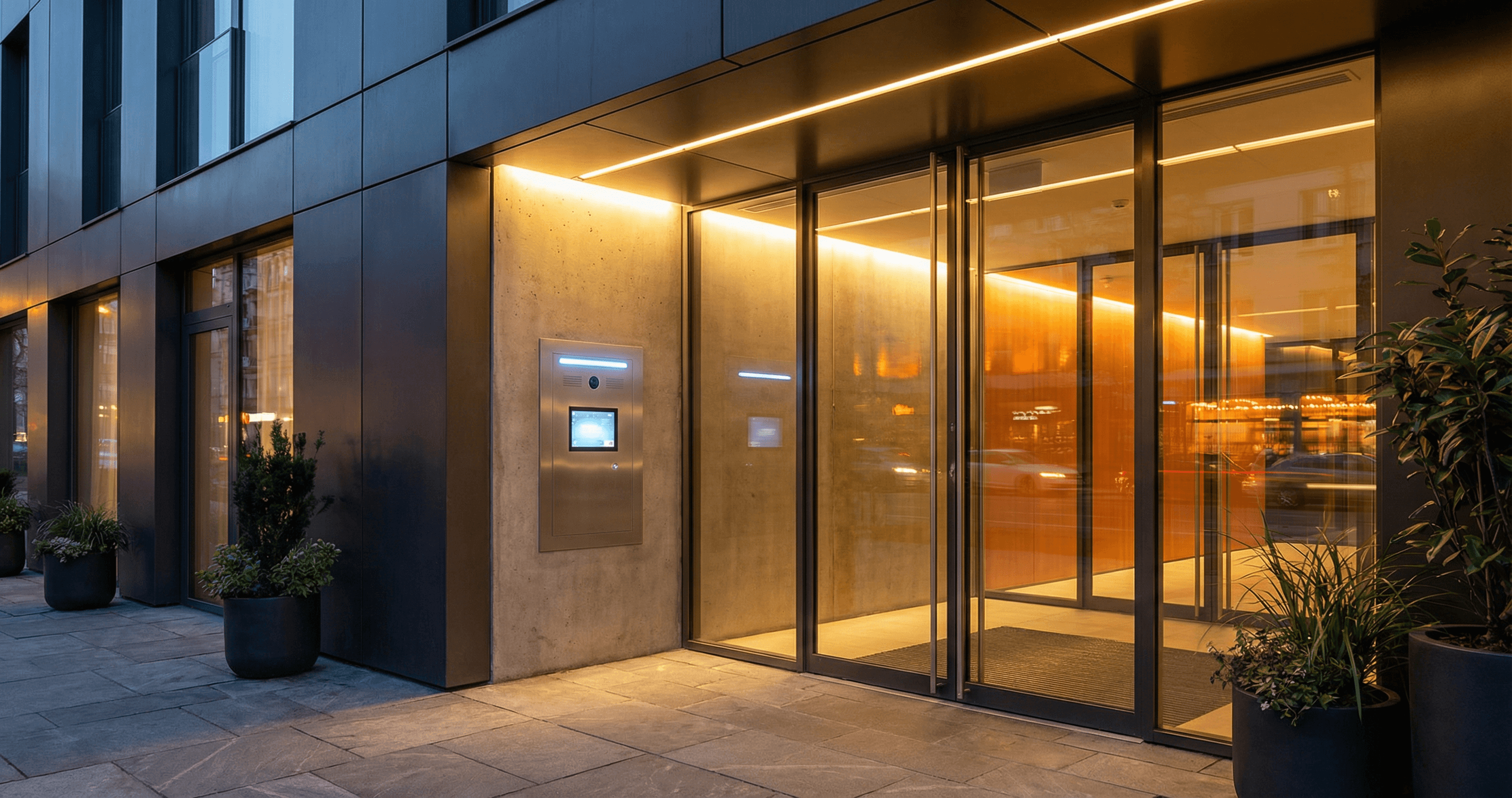
Three out of four multifamily decision makers plan to upgrade their building's access control in the next two years. According to Parks Associates, over 75% are actively evaluating replacements for the legacy intercoms and call boxes they've relied on for decades. Yet most buildings haven't changed a thing.
The disconnect comes down to cost and complexity. A smart buzzer for rentals solves this by adding a software layer to your existing phone-based intercom. Instead of ripping out hardware, you get AI-powered visitor screening, automated delivery access, and policy-driven building entry without installing a single piece of new equipment.
This guide explains what makes a buzzer system "smart," why the timing matters for rental property managers, and how to evaluate solutions across your portfolio.
What Is a Smart Buzzer for Rentals?
A smart buzzer is software that intercepts calls from your building's existing intercom system, uses AI to screen visitors and apply your access rules, and takes action (grant entry, deny entry, notify a resident) without manual involvement. It turns a passive call box into an automated access management system.
Traditional buzzers do one thing: ring a phone number when someone presses a button. If no one answers, the visitor is stuck outside. If someone answers, they make a snap judgment with minimal information. There's no logging, no policy enforcement, and no way to manage access across a portfolio.
A smart buzzer adds three capabilities that traditional systems lack:
Automated screening. AI answers the intercom call, engages the visitor in a natural conversation, and determines who they are and why they're there.
Rule-based access. You configure policies (delivery windows, vendor access schedules, quiet hours, resident allowlists) and the system enforces them consistently across every call, every building, every hour of the day.
Centralized management. A single dashboard lets you manage buzzer settings, review access logs, and update tenant directories across your entire portfolio.
The Software-First Upgrade Path
Rather than replacing hardware, you layer intelligent software on top of existing infrastructure. The call box in your lobby stays exactly where it is. The phone line it dials gets redirected to an AI system that handles everything your current setup can't.
Knockli is built on this principle. It connects to any building that uses a phone-based intercom (the kind that dials a number when someone buzzes) and adds AI screening, rule automation, and portfolio-wide management. Setup takes 10-15 minutes per building with zero hardware changes. For a deeper look at this approach, see our guide on how to modernize building access without hardware replacement.
Why Rental Properties Need Buzzer Automation Now
The window for treating technology upgrades as optional is closing. Resident expectations are rising, operational costs are increasing, and legacy intercom infrastructure is aging out. These forces are converging to make buzzer automation a competitive necessity for property managers running multifamily rental portfolios.
The data tells a clear story. According to NAA and KeyTrak research on multifamily access control, 76% of properties still rely on traditional keys and manual buzzer systems. At the same time, according to Parks Associates, 62% of properties that are upgrading access control cite meeting resident expectations as the primary driver.
Residents increasingly expect smart building amenities. They want deliveries handled smoothly, guest access to work reliably, and after-hours entry that doesn't depend on whether someone picks up a phone. When competitors offer these features and you don't, it shows up in vacancy rates.
Meanwhile, according to IREM and AppFolio, AI adoption in property management jumped from 21% to 45% in under two years. Early adopters are already seeing operational benefits. Those still evaluating risk falling further behind.
For more context on how this shift is playing out across the industry, read our analysis of the AI adoption gap in property management.
Three factors make the current moment especially compelling for rental properties:
- Legacy systems are aging out. Many buildings run intercoms installed 15-20 years ago. Replacement parts are harder to source. Repair costs keep climbing, and each fix buys less time.
- Labor costs keep rising. Manual buzzer handling ties up staff time that could go toward leasing, maintenance oversight, or resident relations.
- Software solutions have matured. Two years ago, AI-powered buzzer automation was experimental. Today, platforms like Knockli handle thousands of intercom calls with reliable screening and consistent policy enforcement.
Traditional Buzzer vs Smart Buzzer Systems
Traditional buzzers relay calls. Smart buzzers manage access. The difference shows up in every operational dimension that matters to property managers: cost structure, visitor handling capabilities, audit trails, and the amount of staff time required to keep building entry running smoothly.
| Feature | Traditional Buzzer | Smart Buzzer System |
|---|---|---|
| Visitor screening | Resident answers and decides | AI screens automatically based on rules |
| Delivery handling | Resident must be available to buzz in | Automated entry during configured windows |
| After-hours access | No coverage unless staff is on-site | 24/7 AI coverage on every call |
| Vendor access | Manual coordination, key handoffs | Scheduled windows with passphrases |
| Directory updates | Physical panel changes, often delayed | Instant digital updates from dashboard |
| Access logs | None | Full audit trail with timestamps |
| Setup cost | $0 (existing) or $5,000-15,000+ (new hardware) | Monthly software subscription |
| Per-building setup time | N/A or weeks for hardware install | 10-15 minutes |
| Portfolio management | Building-by-building, no central view | Single dashboard across all properties |
The cost structure difference is significant. Traditional hardware replacement requires $5,000-15,000+ per building in capital expenditure, plus installation timelines measured in weeks. Software-first solutions convert that into a predictable monthly operating expense.
According to the IREM PropTech Insights report, 44.2% of property managers cite cost as the primary obstacle to technology adoption. The OpEx model of smart buzzer platforms directly addresses this barrier by eliminating the capital approval process entirely.
How Smart Buzzer Automation Works in Practice
Smart buzzer automation intercepts incoming intercom calls, conducts an AI-powered conversation with the visitor, evaluates your building's access rules in real time, and takes the appropriate action. The entire process runs automatically on every call, around the clock, without requiring staff involvement or resident participation.
Here's the flow, using Knockli as a concrete example:
- Visitor buzzes a unit. The call box dials the unit's assigned number. Instead of ringing a resident's phone, the call routes to Knockli via simple call forwarding.
- AI engages the visitor. Knockli's AI answers with a natural greeting and asks the visitor to identify themselves: "Hi, who are you here to see today?"
- Rules are evaluated. The system checks your configured policies. Recognized delivery carrier during an approved window? Vendor with a valid passphrase? Unknown visitor during quiet hours?
- Action is taken. Knockli grants entry (sends the unlock tone), denies entry with a polite explanation, or notifies the resident. Every interaction is logged with a full audit trail.
This flow covers every visitor scenario property managers handle daily. For a deeper dive into the AI capabilities, see our article on how an AI doorman works for property managers.
Buzzer Directory Management
Buzzer directory management is one of the most overlooked operational wins. Traditional systems require physical changes to a lobby panel when tenants move, and those updates often lag by days or weeks. With a smart buzzer, directory changes happen instantly from your dashboard. New tenant moves in Monday? Their buzzer is active the same day. Previous tenant's access is revoked with one click. Across buildings with frequent turnover, automated buzzer directory management eliminates a persistent source of delays and security gaps.
Choosing the Right Smart Buzzer for Rentals
The right smart buzzer for your rental portfolio depends on four factors: compatibility with existing intercom hardware, scalability across multiple buildings, reporting and audit capabilities, and cost structure. Evaluating each factor before committing helps you avoid solutions that work for single buildings but fail at portfolio scale.
Many smart buzzer solutions target individual consumers or single-building owners. When evaluating options for a rental portfolio, focus on these criteria:
Hardware compatibility. The solution must work with your existing call boxes. If it requires proprietary hardware or specific intercom brands, deployment complexity and cost increase dramatically. Look for systems that work with any phone-based intercom. For a detailed evaluation framework, see our building access technology evaluation guide.
Portfolio scalability. Can you manage 5, 20, or 100 buildings from a single interface? Knockli's dashboard provides centralized control across your portfolio, with building-specific rules, cross-property activity views, and consolidated reporting.
Reporting and compliance. Access logs matter for liability protection and dispute resolution. Ensure the system provides detailed audit trails with timestamps, visitor identification, and the action taken on each call.
Cost structure. Prefer monthly subscriptions over large upfront costs. The NMHC and Grace Hill Renter Preferences Survey confirms that residents expect smart building technology, but the path to providing it shouldn't require capital approval for every building.
Questions to ask any vendor:
- Does it work with my current call box without hardware modifications?
- How long does deployment take per building?
- Can I set different access rules for different buildings?
- What happens during an internet or service outage?
- How are directory changes handled when tenants move?
The ROI of Smart Buzzer Automation
For most rental portfolios, smart buzzer automation pays for itself within months. The return comes from three sources: reduced staff time spent on access coordination and visitor handling, fewer resident complaints about missed deliveries and unreliable guest access, and improved retention driven by modern building amenities that meet tenant expectations.
The math varies by portfolio size, but the equation is straightforward:
- Time savings. Buzzer automation in property management reclaims hours each week that staff currently spend on access coordination, vendor entry, and delivery issues.
- Complaint reduction. Automated delivery handling and consistent visitor screening address frustration before it becomes a complaint.
- Retention impact. A property with reliable, automated access has a tangible advantage over one where the buzzer rings into the void after 6 PM.
Cost comparison by approach:
| Approach | Annual Cost (per building) | Coverage | Setup Time |
|---|---|---|---|
| No coverage | $0 | None | N/A |
| Part-time doorman | $25,000-40,000 | Limited hours | Weeks (hiring) |
| Full-time doorman | $60,000-80,000+ | Business hours | Weeks (hiring) |
| Smart buzzer software | $1,800-5,000 | 24/7, every call | 10-15 minutes |
For a 50-unit building, smart buzzer software represents a fraction of what traditional staffing costs. Even compared to doing nothing, the operational time savings and reduced complaint volume create a clear return.
Frequently Asked Questions
How long does it take to set up a smart buzzer system?
With Knockli, setup involves forwarding your call box's phone line, configuring access rules, and adding your tenant directory. Typical time is 10-15 minutes per building. No installation appointments, no wiring, no downtime.
Will a smart buzzer work with my existing call box?
If your call box makes a phone call when someone buzzes (how the vast majority of multifamily intercoms work), a software-first smart buzzer works with it. No dependency on specific brands or models.
What happens if the smart buzzer system goes down?
Reliable platforms include fallback routing. If the AI service is temporarily unavailable, calls forward to a designated backup number. The call box functions normally since no hardware has been modified.
Can I set different rules for different buildings?
Yes. Portfolio-oriented solutions like Knockli let you configure building-specific rules from a centralized dashboard. One building might allow delivery access 8 AM to 8 PM while another restricts to business hours. Vendor passphrases, quiet hours, and resident preferences are all customizable per property.
Get Started with Smart Buzzer Automation
If you manage rental properties and your buildings still rely on traditional buzzers, the upgrade path doesn't require a capital project. Knockli's property management solution connects to your existing intercoms, adds AI-powered screening and rule automation, and gives you centralized control across your portfolio. Setup takes minutes per building with predictable monthly pricing.
See how it works at knockli.com/solutions/property-management.
Related Articles
Last-Mile Delivery's $95 Billion Problem Routing Can't Solve
The logistics industry optimized routing while $95B in waste accumulates at building doors. Why old-stock housing drives delivery failure.
Building Access Upgrades Driven by Lockouts, Not Break-Ins
NAA/KeyTrak research shows zero property managers cited security as a reason for smart access adoption. Lockouts, rekeying, and standardization drive upgrades.
AI Doorman for Property Managers: What It Is and Why It Works
An AI doorman handles building access 24/7 without staff. Learn how it works, what it costs, and why property managers are adopting it.