Apartment Package Theft Costs $15B: Building-Level Solutions
Package theft costs Americans $15 billion annually, with apartment residents 3x more likely to be victims. Individual resident precautions aren't enough. Here's how property managers can implement building-level prevention strategies that actually reduce theft.
Knockli Team
Product Team
Building the future of smart building access for property portfolios.
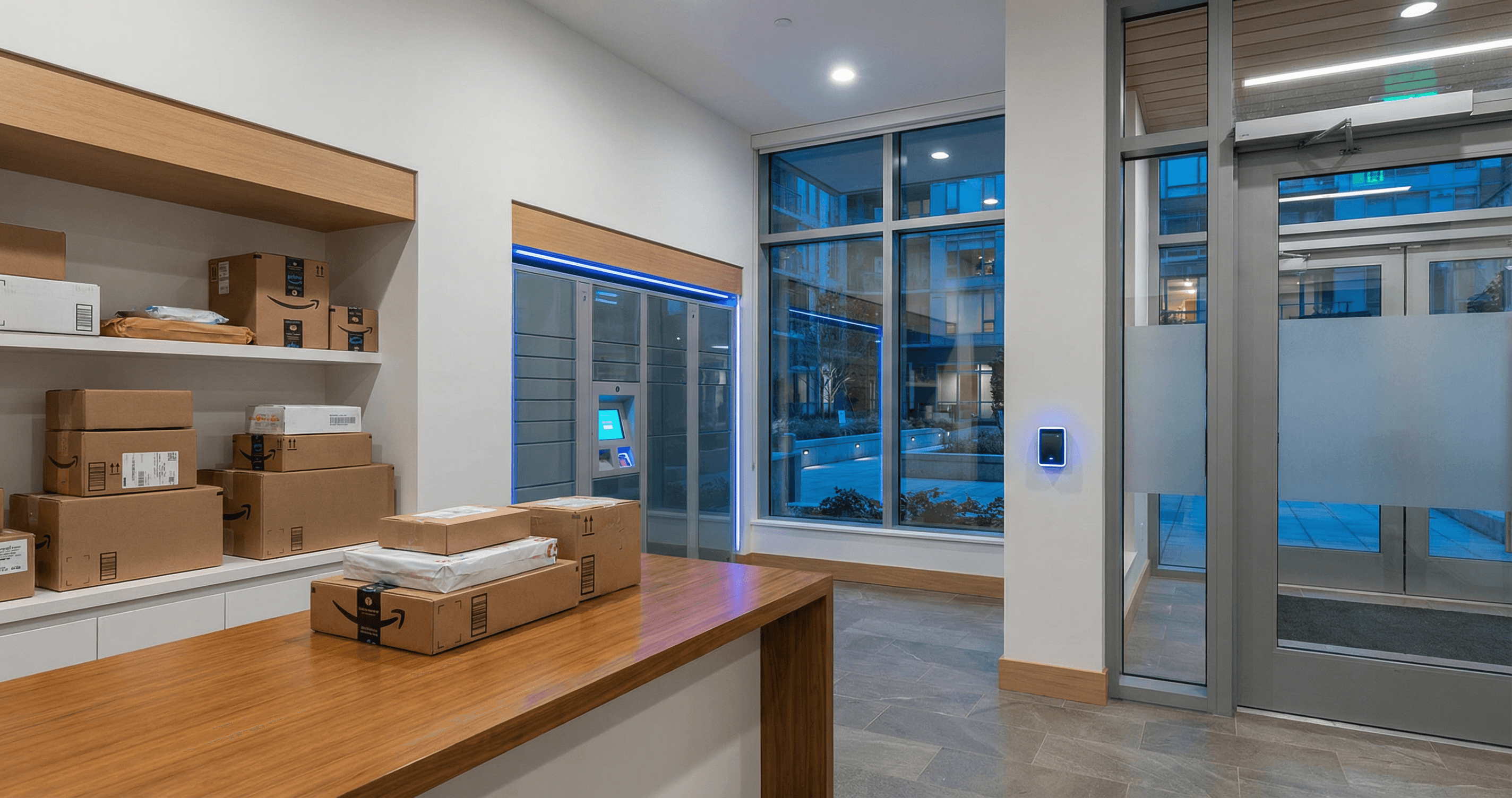
Package theft costs Americans $15 billion annually. That number breaks down to roughly 250,000 stolen packages every day, according to SafeWise's 2025 analysis. For property managers, the more pointed statistic is this: apartment package theft prevention is a building-level problem because apartment residents are three times more likely to have packages stolen than people living in single-family homes.
The instinct is to treat this as a resident problem. Residents can request signature delivery, install cameras, or use Amazon Lockers. But these individual solutions don't address the structural vulnerability: shared entryways, unsecured lobbies, and delivery access that depends on whoever happens to be near the buzzer.
Building-level prevention is where property managers can make a measurable difference.
The Numbers Behind Apartment Package Theft
The scale matters because it drives the urgency for building-level intervention.
Security.org's 2025 annual report puts the average stolen package value at $222. For a 200-unit building where residents receive roughly 10 packages per month each (up from 6 pre-pandemic), that's 2,000 monthly deliveries flowing through common areas. Even a 2% theft rate means 40 stolen packages per month, costing residents nearly $9,000.
Those losses show up in your resident satisfaction scores, your online reviews, and eventually your renewal rates. NMHC's package delivery research found that package security ranks as the second most important amenity for apartment residents, behind only fitness facilities. When packages disappear, residents blame the building.
The SafeWise metro area analysis reveals that theft rates vary dramatically by location, but the pattern holds: dense, multi-unit properties with shared access points are consistently more vulnerable. This isn't a problem that better resident behavior can solve. It's an infrastructure problem.
Why Standard Approaches Fall Short
Most buildings rely on one of three default approaches to package management. None of them adequately address apartment package theft at the building level.
"Leave at door" policies put the package in the most vulnerable location possible. Hallways and lobbies in multifamily buildings see dozens of people daily, most of them unknown to the resident expecting a delivery. The gap between delivery and pickup is when theft happens, and buildings can't control how quickly residents retrieve packages.
Security cameras document theft after it occurs. They're useful for investigations but poor as deterrents. Thieves know that enforcement from camera footage alone is rare. Fewer than one in four package theft victims even file a police report, which means camera footage often goes unused.
Resident-level precautions (redirect to lockers, require signatures, schedule delivery windows) shift the burden to individuals. They help the residents who adopt them but do nothing about the building's access gap. If anyone can buzz in claiming to be a delivery driver, the building's perimeter is only as strong as the least cautious resident. For more on what residents can do on their own, see our guide to strategies for never missing apartment deliveries.
The fundamental issue is access. Delivery drivers need to enter the building to complete deliveries, but buildings struggle to verify who is a legitimate driver and who is not.
Building-Level Prevention Strategies That Work
Effective apartment package theft prevention operates at the building level, controlling who enters and when. The strategies below address the access gap that makes multifamily properties vulnerable.
Controlled carrier access with verification
The highest-impact intervention is verifying delivery drivers before they enter the building. Rather than relying on residents to buzz in anyone who claims to have a package, the building itself can manage carrier access.
Knockli handles this by answering intercom calls with AI that verifies the caller's identity through natural conversation. When a delivery driver buzzes the building, Knockli asks who they are and what they're delivering. Verified carriers like Amazon, FedEx, UPS, USPS, and DoorDash can be granted automatic access based on your building's policies. Unverified callers get screened or declined.
This approach eliminates the primary attack vector: social engineering. A thief who buzzes and says "I have a package" gets questioned and verified. The AI doesn't guess or get flustered. It follows the policy.
Time-based delivery policies
Not all deliveries need 24-hour access. Property managers can set time windows that match their building's risk profile:
- Weekday business hours (8 AM to 6 PM): Auto-unlock for verified carriers when building traffic provides natural surveillance
- Evenings and weekends: Require additional verification or resident confirmation
- Overnight: Decline all delivery access unless pre-authorized
Knockli supports these policies through natural language configuration. You can set rules like "Let verified carriers in before 7 PM on weekdays" or "Require resident approval for all deliveries after dark." The system applies these rules consistently without requiring staff presence.
Secure package rooms and lockers
A dedicated, access-controlled space for packages reduces lobby and hallway exposure. The choice between package rooms and package lockers depends on your building's volume and budget.
| Factor | Package Room | Package Lockers |
|---|---|---|
| Capacity | Scales with room size | Fixed number of compartments |
| Cost per unit | Lower upfront | Higher upfront, lower theft |
| Oversized packages | Accommodates easily | Often can't fit large items |
| Resident experience | Requires searching | Assigned compartment with code |
| Staff involvement | May need monitoring | Self-service |
Regardless of format, the room or locker area is only as secure as the access to it. If delivery drivers have unrestricted access to the package area, the theft risk shifts from the lobby to the package room. Controlled entry, logging, and surveillance at the package area entrance are essential.
Audit trails for every delivery event
When theft does occur, the ability to investigate depends on having records. Knockli logs every intercom interaction: who buzzed, when, what they said, and whether access was granted. This creates a searchable audit trail that shows exactly which delivery events occurred on a given day.
For property managers dealing with theft complaints, this record is invaluable. Instead of relying on camera footage and timestamps, you have documented proof of who entered the building and when. If a resident reports a stolen package, you can check whether a delivery was actually made at that time or whether the entry was unauthorized.
Resident notification and communication
Residents who know their package has arrived retrieve it faster. Faster retrieval means less time in common areas where theft can happen.
Some buildings integrate delivery notifications through their access system. When Knockli processes a delivery access event, that event can be logged and associated with the building address, giving property managers a record they can reference when residents ask questions about delivery activity.
Combining building-level access control with routine building operations automation reduces the operational burden on your team while improving the resident experience.
How AI-Powered Delivery Access Changes the Equation
Traditional delivery management is reactive. Someone buzzes, someone decides, and the building hopes it works out. AI-powered delivery access is proactive and policy-driven.
Here's how the flow works with Knockli:
- Delivery driver buzzes the building. Knockli answers with a professional greeting.
- AI verifies the caller. Through natural conversation, it determines who is calling and why. Carrier identification happens in real time.
- Building policies apply automatically. Is it within delivery hours? Is this a verified carrier? Does the resident accept auto-delivery? The system checks the rules you've set.
- Access granted or declined. Verified deliveries get in. Unverified callers are screened further, forwarded to a resident, or declined.
- Everything is logged. Every call, every decision, every outcome is recorded in the audit trail.
This replaces the weakest link in most buildings' security: the person who buzzes everyone in because it's easier than verifying each call. The AI doesn't take shortcuts, and it works at 2 AM the same way it works at 2 PM.
For buildings where after-hours delivery is a particular concern, Knockli's time-based rules mean you can set stricter verification for evening and weekend deliveries without blocking them entirely. The system adapts to your policies rather than forcing a one-size-fits-all approach.
Property managers evaluating this approach can use the same framework they'd use for any building technology investment. Our guide on proving the ROI of building access technology walks through how to build the business case, including how to quantify reduced theft and improved resident satisfaction.
Measuring the Impact of Building-Level Prevention
Implementing solutions without measuring outcomes is guessing. Track these metrics before and after deploying building-level package theft prevention.
Theft reports per month. The most direct measure. Track the number of package theft complaints filed by residents. A meaningful reduction (30%+ within the first quarter) indicates the prevention strategy is working.
Delivery access events. Knockli's audit trail shows how many delivery-related entries occur daily. Unusually high or off-pattern events can signal potential issues before they become theft complaints.
Resident satisfaction signals. Monitor online reviews, survey responses, and maintenance request patterns for mentions of package security. Properties that solve the package problem often see satisfaction improvements that extend beyond delivery management, because residents feel their concerns are being heard.
Renewal rate correlation. Package theft is a retention issue. Reducing resident complaints through better access management has a direct line to renewal rates. Track whether buildings with package prevention measures see higher renewals than those without.
Liability exposure. While landlord liability for stolen packages varies by jurisdiction, demonstrating proactive prevention measures strengthens your position. Buildings that can show they implemented verification, logging, and access control are in a stronger position than buildings that did nothing.
The Cost of Doing Nothing
Package theft erodes trust between residents and their building. Every stolen package is a reminder that the building's security has gaps. For residents who experience repeat theft, it becomes a reason to move.
With turnover costing roughly $4,000 per unit and 35% of renters planning to move within the next 12 months, the connection between package security and retention is direct. Buildings that treat package management as a cost center rather than a retention tool are leaving money on the table while residents leave their buildings.
The $15 billion annual cost of package theft isn't split evenly. It's concentrated in the properties that haven't adapted. Building-level prevention narrows the gap between what residents expect and what their building delivers.
Knockli's AI-powered access management verifies delivery drivers, applies your building's delivery policies, and logs every access event automatically. No hardware installation required, and setup takes under 15 minutes per building. See how Knockli works for property managers.
Related Articles
Last-Mile Delivery's $95 Billion Problem Routing Can't Solve
The logistics industry optimized routing while $95B in waste accumulates at building doors. Why old-stock housing drives delivery failure.
Multifamily Package Management Without the Locker Investment
Parcel lockers cost $6,000-$21,000+ per installation. Learn how multifamily operators manage package delivery with intercom-based AI instead of locker hardware.
Smart Buzzer for Rentals: Automate Every Building Entrance
A smart buzzer for rentals automates visitor screening, delivery access, and entry policies with no hardware changes. Full guide for property managers.